
Why 20/20 Vision Does Not Mean Your Eyes Are Healthy
Why 20/20 Vision Does Not Mean Your Eyes Are Healthy
“I can see 20/20, so I do not need an eye exam.” It sounds logical—but the eye chart answers only one question: how clearly can you identify high-contrast detail at a specific distance?
The American Optometric Association explains that 20/20 vision measures distance visual acuity, not every part of vision. Peripheral awareness, eye coordination, focusing, depth perception, color vision and eye health all matter too.
What 20/20 Actually Means
Visual acuity is written as a fraction. In the United States, 20/20 means that a person sees at 20 feet the detail expected to be seen at 20 feet under the test conditions. It does not mean the eyes are perfect, and it does not describe comfort, endurance or health.
The American Academy of Ophthalmology’s explanation of 20/20 vision notes that visual acuity is only one measurement in an eye examination.
A person can have 20/20 acuity and still experience:
- dry, burning or watery eyes;
- glare or difficulty driving at night;
- headaches during near work;
- trouble changing focus between distances;
- reduced side vision;
- unequal vision between the eyes;
- early glaucoma or retinal disease; or
- contact-lens complications.
A Screening Is Not a Comprehensive Examination
School, workplace and driver screenings are designed to identify certain problems efficiently. They are valuable, but they do not replace a medical assessment of the eyes. The CDC describes a vision screening as a way to identify children who may need additional eye care, while a comprehensive examination evaluates much more.
The AOA’s comprehensive-exam guidance makes the same distinction: a screening cannot be relied on to provide the same information as a complete eye and vision examination.
See Well’s comprehensive eye-exam page explains how refraction, visual function and eye-health testing fit together.
What a Comprehensive Eye Exam May Evaluate
The exact testing depends on age, symptoms, medical history and findings. A complete visit may evaluate:
- current glasses prescription and best-corrected vision;
- pupils and eye movements;
- how the eyes work together and focus;
- peripheral vision when indicated;
- eye pressure and glaucoma risk;
- eyelids, tear film, cornea, iris and lens;
- retina, macula, blood vessels and optic nerve; and
- the effect of diabetes, blood pressure, medications and family history.
The AAO’s eye-exam overview describes how different parts of the exam contribute separate information. The CDC also emphasizes that comprehensive dilated exams can detect eye disease before symptoms become obvious.
What Optomap Adds—and What It Does Not Replace
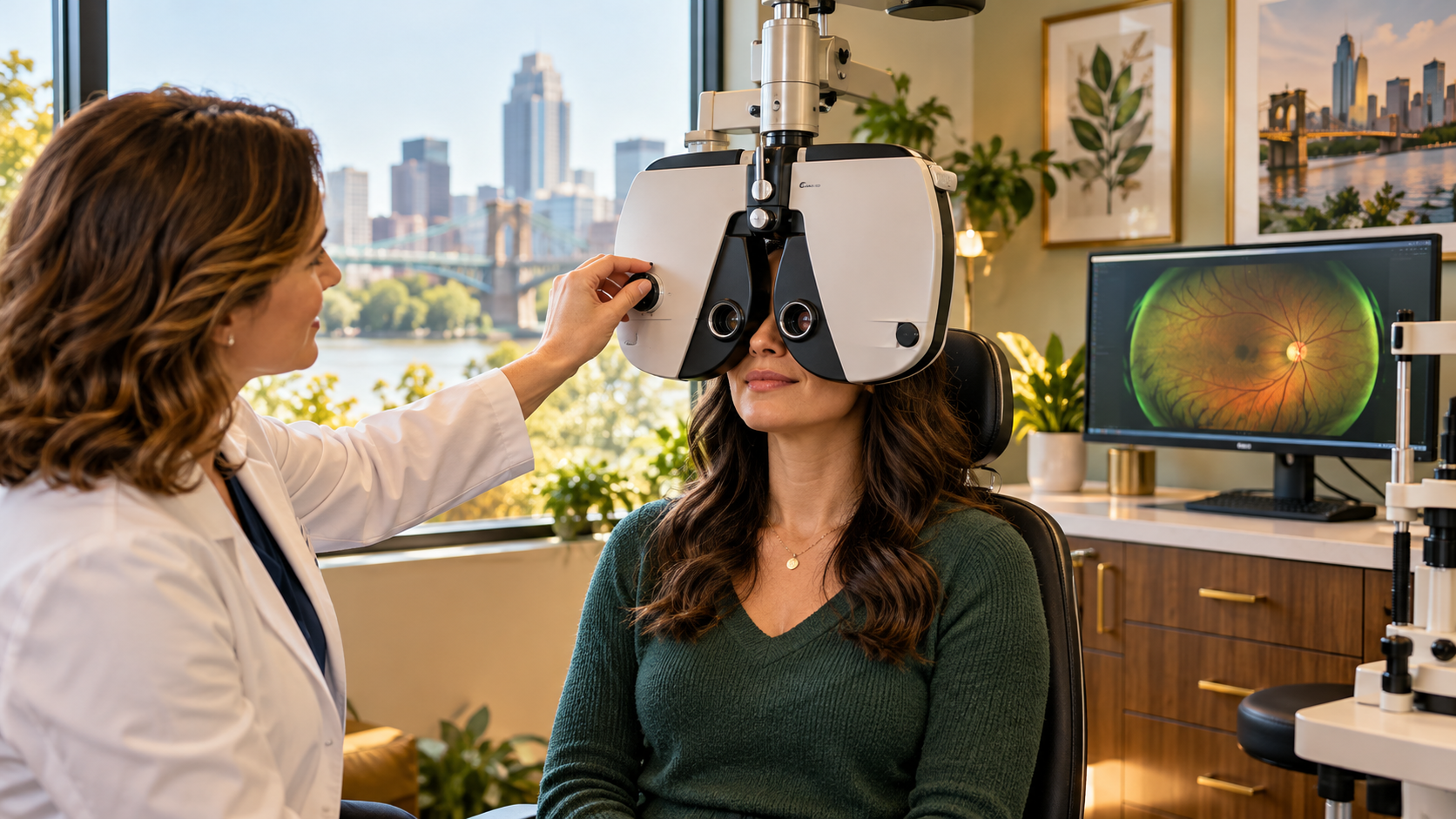
See Well includes Optomap retinal imaging with its comprehensive exams. The wide-field image helps Dr. Baik document much of the retina and compare findings over time. It can make the conversation more visual because patients can see the image with the doctor.
Imaging is not a substitute for clinical judgment. Dilation may still be recommended based on symptoms, medical history or findings. Read See Well’s guide, “Do I Need My Eyes Dilated?”, for a patient-friendly explanation of how imaging and dilation can complement each other.
Clear Vision Does Not Cancel Medical Risk
Glaucoma, diabetic retinopathy and early macular disease may develop before a person notices blur. The National Eye Institute recommends comprehensive dilated examinations as part of protecting vision, with timing based on age and risk.
People with diabetes need retinal care even when the eye chart is clear. See Well provides diabetic-related eye examinations and can communicate relevant findings to the patient’s medical team when authorized.
Children also deserve more than a distance chart. A child may compensate for farsightedness, use one eye more than the other or struggle with near work without knowing how to describe it. Families can review See Well’s pediatric eye-exam information for care beginning at age four.
A Good Exam Should Connect to Daily Life
The final question is not just “Can you read the line?” It is “How is your vision working for your actual day?” Dr. Baik asks about driving, screens, reading, sports, headaches, eyewear, contact lenses and the tasks that matter most.
If glasses are recommended, See Well’s optical team can translate the prescription into a frame and lens plan. Optikam measurements, professional fitting and after-purchase adjustments help keep the prescription, product and follow-up connected. Patients can review the complete value before discussing individual components and choose a practical option rather than an overwhelming catalog.
Explore Hyde Park & Nearby Neighborhoods
See Well Eyecare is on Erie Avenue in Hyde Park (45208), minutes from Oakley (45209), Mount Lookout and Columbia-Tusculum. The practice welcomes Cincinnati families and professionals who want one local team for eye exams, medical eye care, glasses and contact lenses.
Local Events & Attractions: Vision for the Details
Reading exhibit labels at the Cincinnati Museum Center, enjoying the galleries at the Cincinnati Art Museum or driving through changing light around Cincinnati all use more than distance acuity. Glare control, near focus, contrast and ocular comfort can affect the experience even when the eye-chart result is 20/20.
Frequently Asked Questions
Is 20/20 perfect vision?
No. It describes distance visual acuity under specific test conditions. It does not measure every visual skill or confirm eye health.
If I passed a work or school screening, do I still need an exam?
Yes, according to the schedule recommended for your age and risk. Screenings identify certain concerns; they do not replace comprehensive care.
Can I have glaucoma and still see 20/20?
Yes. Early glaucoma may affect the optic nerve and peripheral vision before central acuity changes. Risk assessment involves more than one eye-pressure reading or one chart result.
Does Optomap replace dilation?
No. Optomap is valuable wide-field retinal imaging, but dilation may still be clinically appropriate. Dr. Baik recommends the examination method needed for the individual patient.
How often should I have an eye exam?
Frequency depends on age, symptoms, contact-lens wear, medical conditions, medications, family history and prior findings. Follow the interval recommended after your own examination.
Schedule More Than an Eye-Chart Check
If it has been a while since your last full examination, request an appointment with See Well Eyecare. Bring your current glasses, contact-lens information, medication list and questions about the situations in which your vision feels least comfortable.
About See Well Eyecare
See Well Eyecare is a locally owned, independent optometry practice in Hyde Park, Cincinnati. Dr. Rawzi Baik and the team provide comprehensive exams, medical eye care, contact lenses, pediatric care, myopia management and a professionally fitted optical experience for patients who want clear explanations and accountable follow-up.
Primary keyword: comprehensive eye exam Cincinnati
Supporting keywords: 20/20 vision meaning, eye exam beyond eye chart, Hyde Park optometrist, Oakley eye doctor, Optomap eye exam
Quick Links
Helpful Articles

All Eye Care Services
Eye care for every stage of life, from routine exams and contact lens fittings to dry eye care, myopia management and medical eye visits. Dr. Baik helps you understand your options and choose care that fits your needs.

Keep In Touch
For non-urgent questions or to learn more about our services, contact us today!

We are an LGBTQ+ friendly clinic that believes all people deserve quality eye care
- 3330 Erie Avenue, Suite 14
Cincinnati, OH 45208 - Phone: (513) 268-8748
- Fax: (513) 268-8758
- Monday 9:00am - 3:00pm
- Tuesday 8:00am - 7:00pm
- Wednesday Closed
- Thursday 8:00am - 5:00pm
- Friday 7:00am - 3:00pm
- Saturday 8:00am - 2:00pm
- Sunday Closed
- Monday
- Tuesday
- Wednesday
- Thursday
- Friday
- Saturday
- Sunday
- Monday
- Tuesday
- Wednesday
- Thursday
- Friday
- Saturday
- Sunday
© 2026 See Well Eyecare. All rights Reserved - Accessibility Statement - Privacy Policy - Terms & Conditions - Sitemap
Managed and Designed by 