
Are Cataracts Changing Your Night Vision? When to Schedule an Eye Exam in Cincinnati
Are Cataracts Changing Your Night Vision? When to Schedule an Eye Exam in Cincinnati
Headlight glare, faded colors and a growing need for brighter light can feel like ordinary aging. Sometimes they are signs that the eye’s natural lens is becoming cloudy—a cataract. Because these changes are often gradual, people may adapt long before realizing how much contrast they have lost.
The National Eye Institute’s cataract overview explains that cataracts can make vision cloudy or blurry, dull colors and increase sensitivity to light. A cataract eye exam in Cincinnati can determine whether cataracts are the main reason for the change or whether another eye condition needs attention.
Common Cataract Symptoms
Cataracts may cause:
- blurred, hazy or dim vision;
- glare or halos around lights;
- trouble driving at night;
- colors that seem faded or yellowed;
- frequent prescription changes;
- double vision in one eye; or
- a need for brighter light when reading.
The American Academy of Ophthalmology’s cataract guide notes that symptoms depend on where and how the lens has clouded. Cataracts are not the only possible cause of glare, however. Dry eye, corneal irregularity, an outdated prescription and retinal disease can overlap with the same complaint.
What the Eye Exam Checks
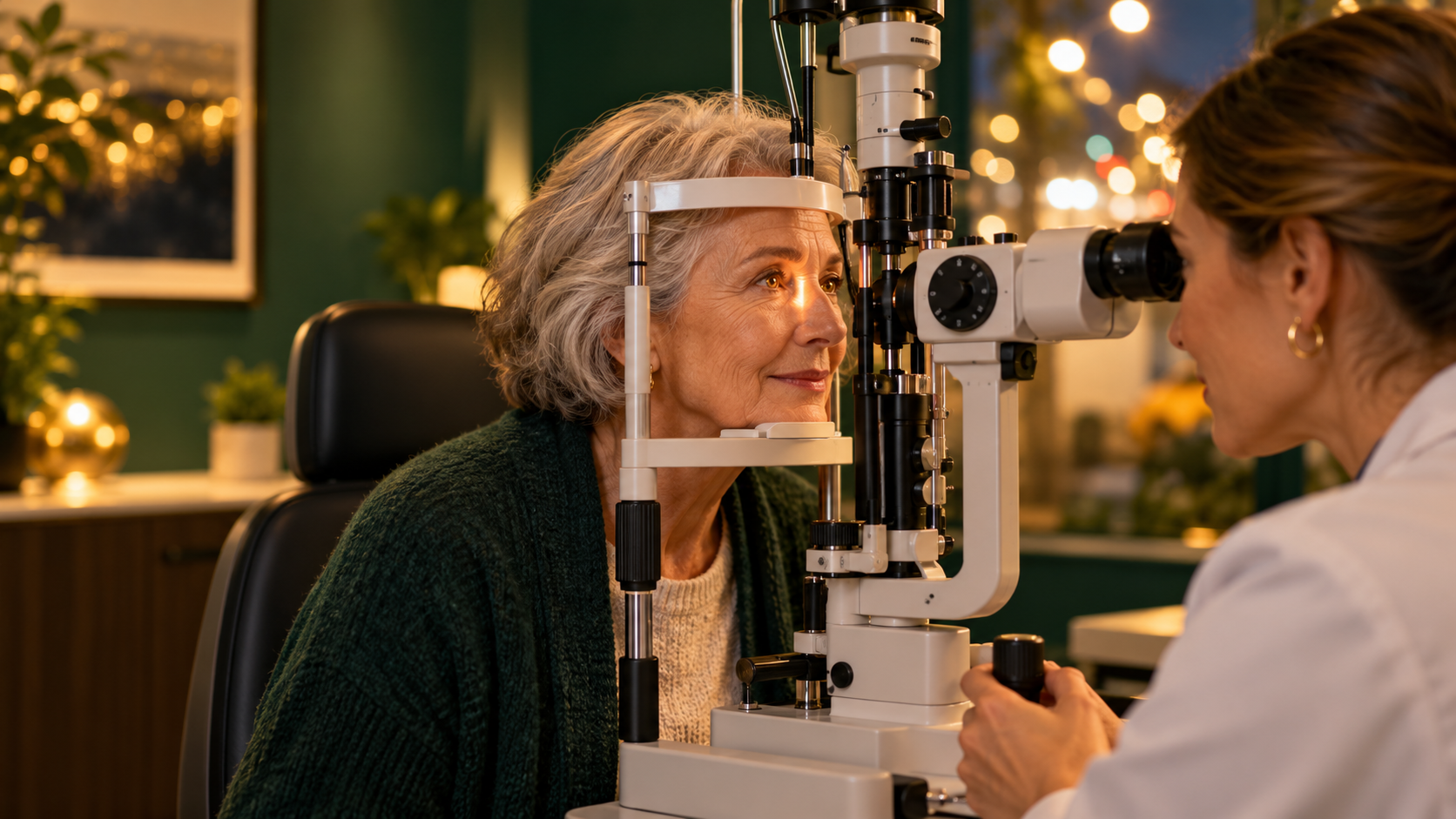
During a comprehensive eye examination, Dr. Baik may evaluate:
- visual acuity and the current glasses prescription;
- glare and contrast concerns;
- the cornea and tear film;
- the clarity and location of the cataract;
- eye pressure; and
- the retina and optic nerve, often with dilation when indicated.
A cataract can be present without being ready for surgery. The question is not simply whether a cataract exists; it is whether the cataract is limiting driving, reading, work, hobbies or safety enough that surgery deserves consideration.
Can New Glasses Help First?
In earlier stages, an updated prescription, improved lighting or glare-reducing lens design may improve function. See Well’s Hyde Park optical can connect the prescription with professional frame fitting and Optikam measurements when new glasses are appropriate.
Sometimes the examination shows that a prescription change will not overcome the cloudy lens. Before ordering eyewear, ask what improvement the doctor expects and whether cataract progression could make the purchase short-lived. That keeps the examination, product recommendation and follow-up connected.
When Is Cataract Surgery Considered?
The NEI explains in its cataract surgery guidance that surgery removes the cloudy lens and replaces it with an artificial lens. It is generally considered when cataracts interfere with activities that matter to the patient.
The AAO’s cataract treatment guidance also emphasizes a function-based decision. There is no single age or visual-acuity number that fits everyone.
When referral is appropriate, Dr. Baik can share examination findings with a cataract surgeon and help patients understand the next step. The surgeon discusses procedure-specific risks, lens choices and expected results. The FDA’s patient information about intraocular lenses is a useful starting point, but the right choice depends on the individual eye and goals.
Symptoms That Should Not Wait
Cataracts usually change vision slowly and do not cause a suddenly painful red eye. Sudden vision loss, a curtain or shadow, new flashes and many floaters, severe pain, nausea or a new neurologic symptom needs urgent evaluation. Do not assume that every new symptom is “just the cataract.”
Explore Hyde Park & Nearby Neighborhoods
See Well Eyecare serves adults from Hyde Park (45208), Oakley (45209), Mariemont (45227), Mount Lookout and nearby Cincinnati communities. A neighborhood examination can establish whether the next step is observation, updated glasses or coordinated surgical referral.
Local Events & Attractions | Nature Tots on October 20
The Cincinnati Parks calendar lists Nature Tots programming on October 20. Whether your week includes grandchildren, evening driving or fall events, tell the doctor which real-life activities have become harder; that context matters in a cataract decision.
Frequently Asked Questions
Do cataracts have to be “ripe” before surgery?
No. Modern decisions are generally based on symptoms, examination findings and how vision affects daily activities—not on waiting for a cataract to reach a particular stage.
Can cataracts come back after surgery?
The removed natural lens does not grow back. A membrane behind the implanted lens can become cloudy later and may be treated by the surgeon when appropriate.
Will cataract surgery eliminate my need for glasses?
Not always. The outcome depends on the eye, implanted lens and chosen focus. Some patients still need glasses for distance, near or both.
Should I buy new glasses before a cataract consultation?
An examination can show whether a prescription change is likely to help enough. Ask before ordering if surgery may be considered soon.
How often should an early cataract be checked?
The interval depends on symptoms and the rest of the eye examination. Return sooner for a meaningful change rather than waiting automatically for the next routine visit.
Schedule a Cataract Evaluation
If glare, dim vision or night driving has become difficult, request an appointment. We will assess the whole eye, explain what is contributing to the problem and coordinate referral when surgery deserves consideration.
About the Author
Dr. Rawzi Baik is the owner and optometrist at See Well Eyecare, an independent Hyde Park practice serving Cincinnati. He earned his Doctor of Optometry degree from The Ohio State University and provides comprehensive and medical eye care, practical optical guidance and coordinated referrals when surgical care is appropriate.
Primary keyword: cataract eye exam Cincinnati
Supporting keywords: cataract symptoms Cincinnati, night-driving glare, blurry vision Hyde Park, cataract referral Oakley, cataract glasses
Quick Links
Helpful Articles

All Eye Care Services
Eye care for every stage of life, from routine exams and contact lens fittings to dry eye care, myopia management and medical eye visits. Dr. Baik helps you understand your options and choose care that fits your needs.

Keep In Touch
For non-urgent questions or to learn more about our services, contact us today!

We are an LGBTQ+ friendly clinic that believes all people deserve quality eye care
- 3330 Erie Avenue, Suite 14
Cincinnati, OH 45208 - Phone: (513) 268-8748
- Fax: (513) 268-8758
- Monday 9:00am - 3:00pm
- Tuesday 8:00am - 7:00pm
- Wednesday Closed
- Thursday 8:00am - 5:00pm
- Friday 8:00am - 3:00pm
- Saturday 9:00am - 2:00pm
- Sunday Closed
- Monday
- Tuesday
- Wednesday
- Thursday
- Friday
- Saturday
- Sunday
- Monday
- Tuesday
- Wednesday
- Thursday
- Friday
- Saturday
- Sunday
© 2026 See Well Eyecare. All rights Reserved - Accessibility Statement - Privacy Policy - Terms & Conditions - Sitemap
Managed and Designed by 