
Is Your Contact-Lens Solution Irritating Your Eyes? A Cincinnati Troubleshooting Guide
Is Your Contact-Lens Solution Irritating Your Eyes? A Cincinnati Troubleshooting Guide
If your contacts sting when you insert them or become uncomfortable later in the day, it is tempting to blame the solution. That is possible—but solution sensitivity is only one part of the differential. Dry eye, deposits, an aging lens case, poor fit, overwear, allergy and corneal infection can feel similar at first.
The safest approach to contact-lens solution irritation in Cincinnati is to stop lens wear when the eye is red or painful and have the lens, care system and ocular surface evaluated together.
First: Know the Red Flags
Remove the lenses and contact an eye-care professional promptly for pain, light sensitivity, worsening redness, discharge or reduced vision. Contact-lens wear increases concern for corneal infection, so these symptoms should not be treated as simple dryness.
The FDA’s contact-lens risk guidance advises removing lenses and contacting an eye-care professional when irritation or signs of infection develop. See Well’s guide to red, watery eyes in contact-lens wearers explains why pain and light sensitivity change the urgency.
Why a Solution May Cause Burning
Multipurpose solutions contain disinfecting and conditioning ingredients. A person may react to a preservative, experience toxicity from improper use or simply have a tear film that no longer tolerates the same lens-care combination.
Other common possibilities include:
- topping off old solution instead of using fresh solution;
- rubbing or rinsing inconsistently;
- a contaminated or overdue lens case;
- cosmetics or hand products transferred to the lens;
- lens deposits or overwear;
- dry eye or eyelid inflammation; or
- switching products without confirming compatibility.
The FDA’s contact-lens solution guidance recommends fresh solution, rubbing and rinsing as directed, air-drying the case and replacing the case regularly.
Hydrogen Peroxide Systems Require Full Neutralization
Hydrogen peroxide systems can be useful for selected patients, but the solution must be used only with its special neutralizing case and for the complete labeled time. Never place non-neutralized peroxide in the eye or rinse a lens with it immediately before insertion.
The FDA’s hydrogen peroxide safety instructions warn that unneutralized peroxide can sting, burn and injure the eye. Do not transfer it to an unmarked bottle or substitute an ordinary flat case.
Do Not Improvise With Water or Saliva
Never store or rinse contacts in tap water, bottled water or homemade saline. Do not use saliva. The National Eye Institute’s contact-lens guidance recommends clean, dry hands and fresh approved solution.
If a chemical care product enters the eye, remove the lens if it comes out easily and start rinsing with clean running water. Poison Control’s eye-exposure instructions recommend immediate irrigation before seeking product-specific advice.
The Best Fix May Be a Different Lens, Not Just a Different Bottle
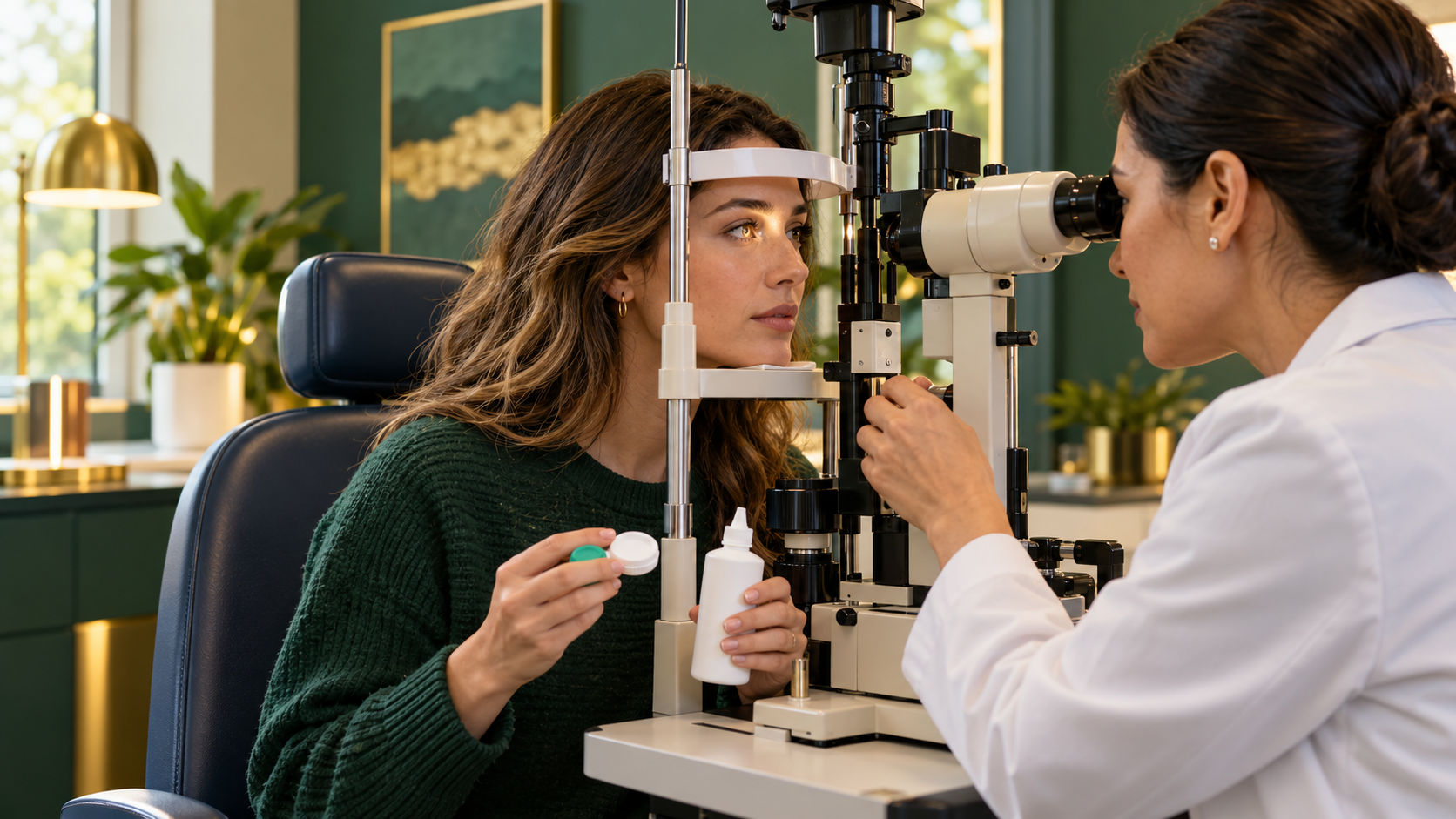
At a contact-lens examination, Dr. Baik can evaluate lens movement, corneal staining, eyelids, tear breakup and replacement habits. Some patients do better with a different multipurpose system, a correctly used peroxide system or daily disposable lenses that remove the storage-solution step.
If dry eye is contributing, an advanced dry-eye evaluation can identify whether the plan should address inflammation, meibomian glands, blinking, environment or another factor.
When See Well prescribes a contact lens, purchasing through the practice keeps the exact product, manufacturer supply channel, fit, rebates when available, shipping and follow-up connected. Temporary trials may be provided for purchasing patients when clinically appropriate. Before ordering elsewhere, ask what is included.
Explore Hyde Park & Nearby Neighborhoods
See Well Eyecare serves contact-lens wearers in Hyde Park (45208), Oakley (45209), Mount Lookout and Columbia-Tusculum. Bring the lens box, solution bottle and case to the visit; those details often make troubleshooting more efficient.
Local Events & Attractions | HallZOOween on October 24
The Cincinnati Zoo’s HallZOOween schedule lists festivities from noon to 5 p.m. on October 24. If contacts become red or painful before an outing, wear glasses and seek advice—do not push through symptoms for the event.
Frequently Asked Questions
Should I switch solutions on my own?
Not if the eyes are painful, red or light-sensitive. Stop lens wear and ask the prescribing office to review the lens-care system and corneal health.
Can I rinse contacts with saline only?
Saline can rinse but does not disinfect reusable lenses. Use the complete prescribed care system.
Why did a solution start bothering me after years?
The ocular surface, allergies, medications, lens material, deposits and wearing habits can change. Examination is more useful than assuming a new allergy.
Are daily disposable contacts safer for a sensitive care system?
They eliminate case and overnight-disinfection steps, but they still require clean hands, correct wear time and professional fitting.
When is burning an emergency?
Severe pain, light sensitivity, decreased vision, rapidly worsening redness or chemical exposure warrants urgent evaluation; a penetrating injury or major vision loss belongs in an emergency department.
Bring the Whole Contact-Lens System
Request an appointment and bring your lenses, packaging, solution and case. We can evaluate the eye and identify whether the safer change involves the solution, lens, schedule or dry-eye plan.
About See Well Eyecare
See Well Eyecare is an independent Hyde Park practice led by Dr. Rawzi Baik. We provide contact-lens fitting, medical eye care and dry-eye services with patient-specific product selection, corneal-health oversight and practical follow-up.
Primary keyword: contact lens solution irritation Cincinnati
Supporting keywords: contact lens burning, contact solution allergy, red eye contacts Cincinnati, hydrogen peroxide contact solution, contact lens exam Hyde Park
Quick Links
Helpful Articles

All Eye Care Services
Eye care for every stage of life, from routine exams and contact lens fittings to dry eye care, myopia management and medical eye visits. Dr. Baik helps you understand your options and choose care that fits your needs.

Keep In Touch
For non-urgent questions or to learn more about our services, contact us today!

We are an LGBTQ+ friendly clinic that believes all people deserve quality eye care
- 3330 Erie Avenue, Suite 14
Cincinnati, OH 45208 - Phone: (513) 268-8748
- Fax: (513) 268-8758
- Monday 9:00am - 3:00pm
- Tuesday 8:00am - 7:00pm
- Wednesday Closed
- Thursday 8:00am - 5:00pm
- Friday 8:00am - 3:00pm
- Saturday 9:00am - 2:00pm
- Sunday Closed
- Monday
- Tuesday
- Wednesday
- Thursday
- Friday
- Saturday
- Sunday
- Monday
- Tuesday
- Wednesday
- Thursday
- Friday
- Saturday
- Sunday
© 2026 See Well Eyecare. All rights Reserved - Accessibility Statement - Privacy Policy - Terms & Conditions - Sitemap
Managed and Designed by 