
Can You Wear Contact Lenses With Pink Eye? A Cincinnati Guide to Stopping—and Restarting—Safely
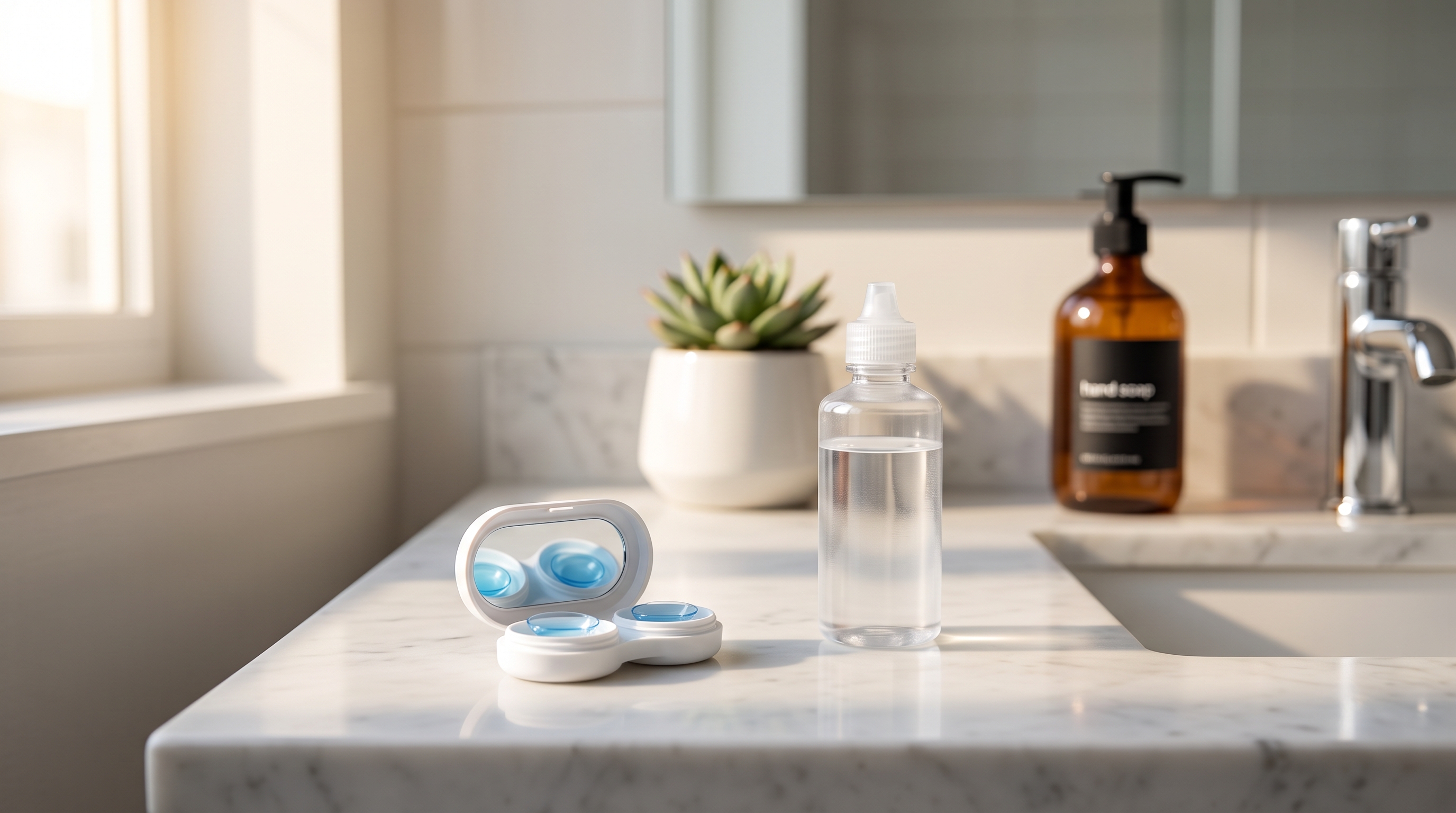
Can You Wear Contact Lenses With Pink Eye? A Cincinnati Guide to Stopping—and Restarting—Safely
If an eye becomes red, itchy, watery or crusted, it is tempting to call it “pink eye,” remove the lens for a few hours and try again. That is not a safe plan.
Conjunctivitis may be viral, bacterial, allergic, chemical or related to contact-lens wear. A corneal abrasion, inflammatory infiltrate or microbial keratitis can initially resemble ordinary conjunctivitis—and those conditions need different treatment.
The practical first rule for contact lenses with pink eye is simple: remove the lenses, do not reinsert them and get guidance when symptoms are significant, persistent or one-sided.
Stop Lens Wear Immediately
The CDC’s pink-eye treatment guidance tells contact-lens wearers to stop until an eye doctor says it is safe to restart. If no examination occurs, lenses should not be resumed while symptoms remain.
After removing the lenses:
- switch to clean backup glasses;
- wash and dry your hands carefully;
- do not use tap water or saliva on the eye or lens;
- do not share towels, drops or cosmetics;
- do not use leftover antibiotics or steroids; and
- call promptly for pain, light sensitivity, reduced vision or marked discharge.
See Well’s pink-eye service page explains why identifying the cause matters.
Why Contact-Lens Wearers Need a Lower Threshold for Care
A soft or rigid lens rests directly on the cornea. The American Academy of Ophthalmology’s contact-lens infection guide identifies keratitis as a major contact-lens-related infection. Symptoms can include redness, pain, light sensitivity, tearing or blurry vision.
The CDC clinical overview of conjunctivitis lists contact-lens use among possible causes and risk contexts. An in-person slit-lamp examination helps distinguish conjunctival inflammation from a corneal problem.
Seek prompt or same-day care when you have:
- moderate or worsening pain;
- new light sensitivity;
- sudden or increasing blur;
- a white or gray corneal spot;
- pronounced one-sided redness;
- significant discharge;
- swelling or difficulty opening the eye; or
- symptoms after sleeping, showering or swimming in lenses.
Our separate red and watery contact-lens eye guide gives detailed warning signs. Severe trauma, chemical exposure or major vision loss may require emergency-department care rather than waiting for an office response.
Viral, Bacterial and Allergic Conjunctivitis Are Not the Same
Viral conjunctivitis often accompanies respiratory symptoms and can spread easily. Bacterial conjunctivitis may produce thicker discharge, but appearance alone is not always definitive. Allergic conjunctivitis commonly causes itching in both eyes and is not contagious.
Antibiotic drops do not treat viral or allergic conjunctivitis. Steroid drops can worsen or mask certain infections. Treatment should match the diagnosis rather than the color of the eye.
What Happens to the Lenses, Case and Makeup?
Do not put the involved lenses back into your eyes. The AAO’s pink-eye myths and facts advises replacing disposable lenses and carefully disinfecting the case before wear resumes. Depending on the lens type and diagnosis, your eye doctor may give more specific instructions.
Replace eye makeup and applicators used around the time of an infectious episode. Wash pillowcases and towels, and avoid sharing them. If the clinician wants to inspect or culture a lens or case, follow those instructions before discarding anything.
When Can Contact Lenses Be Worn Again?
The answer depends on the cause, treatment and corneal findings. Do not use “the eye looks less red” as the only test.
Before resuming, you may need:
- complete symptom resolution;
- completion of prescribed treatment;
- confirmation that the cornea is healthy;
- a new pair of lenses;
- a fresh or properly disinfected case; and
- review of the wearing and replacement schedule.
For patients who repeatedly develop irritation, a contact-lens examination can assess fit, tear film, corneal health and whether a daily disposable or another design may better suit the eye.
The FDA’s contact-lens safety guidance reinforces that contact lenses are regulated medical devices and should be used with prescribed care systems—not water.
Buying Lenses Where Your Eye Care Lives
When a prescribed lens is purchased through See Well, the doctor, product, supply channel and follow-up remain connected. The team can confirm the exact lens, help with eligible manufacturer rebates and annual-supply convenience, arrange shipping when available and troubleshoot a product concern.
This does not guarantee that a complication will never occur. It gives the patient one local team that knows the fit and can help respond when something changes. Before ordering elsewhere, ask what is included.
Explore Hyde Park & Nearby Neighborhoods
See Well Eyecare provides contact-lens and medical eye care in Hyde Park (45208), convenient to Oakley (45209), Mariemont (45227) and Columbia-Tusculum. Keep backup glasses accessible at work, school and in the car so stopping lens wear is practical.
Local Events & Attractions | Bring Backup Glasses to BLINK
BLINK continues through October 11 from 7–11 p.m.; consult the official event guide for current routes. Long nights, crowds, wind and delayed bedtime are good reasons to carry glasses, a clean lens case and prescribed supplies. Never sleep in lenses because an event ran late.
Frequently Asked Questions
Can I wear one contact lens in the unaffected eye?
Ask the clinician evaluating you. When infection is possible, avoiding lenses altogether is often the cleanest approach until the cause and restart plan are clear.
Can I use redness-relief drops?
They may mask appearance without treating the cause. Remove the lens and obtain advice based on symptoms and examination findings.
Do I need antibiotics?
Not every conjunctivitis is bacterial. Antibiotics do not treat viruses or allergies, and self-starting leftover medication can delay correct care.
Should I throw away my contact-lens case?
Replacement is often sensible after an infectious episode, but follow your eye doctor’s instructions—especially if the lens or case may be useful for evaluation.
What if the eye is painful or light-sensitive?
Those are warning symptoms in a lens wearer. Remove the lens and seek prompt professional guidance rather than waiting for routine care.
Red Eye in Contacts? Stop Wear and Tell Us the Symptoms
Request an appointment and state that you wear contacts, when redness began, whether the eye hurts and whether vision or light sensitivity changed. Do not wait for an online response when symptoms are severe or rapidly worsening.
About the Author
Dr. Rawzi Baik is the owner and optometrist at See Well Eyecare, an independent Hyde Park practice serving Cincinnati. He earned his Doctor of Optometry degree from The Ohio State University and provides comprehensive, medical, contact-lens, dry-eye, pediatric and myopia-management care with clear explanations and individualized follow-up.
Primary keyword: contact lenses with pink eye
Supporting keywords: pink eye contact lens wearer, conjunctivitis contacts Cincinnati, red eye contact lenses, when to restart contacts, contact lens infection Cincinnati
Quick Links
Helpful Articles

All Eye Care Services
Eye care for every stage of life, from routine exams and contact lens fittings to dry eye care, myopia management and medical eye visits. Dr. Baik helps you understand your options and choose care that fits your needs.

Keep In Touch
For non-urgent questions or to learn more about our services, contact us today!

We are an LGBTQ+ friendly clinic that believes all people deserve quality eye care
- 3330 Erie Avenue, Suite 14
Cincinnati, OH 45208 - Phone: (513) 268-8748
- Fax: (513) 268-8758
- Monday 9:00am - 3:00pm
- Tuesday 8:00am - 7:00pm
- Wednesday Closed
- Thursday 8:00am - 5:00pm
- Friday 8:00am - 3:00pm
- Saturday 9:00am - 2:00pm
- Sunday Closed
- Monday
- Tuesday
- Wednesday
- Thursday
- Friday
- Saturday
- Sunday
- Monday
- Tuesday
- Wednesday
- Thursday
- Friday
- Saturday
- Sunday
© 2026 See Well Eyecare. All rights Reserved - Accessibility Statement - Privacy Policy - Terms & Conditions - Sitemap
Managed and Designed by 