
Eye Pain and Light Sensitivity: When It Is More Than Eye Strain
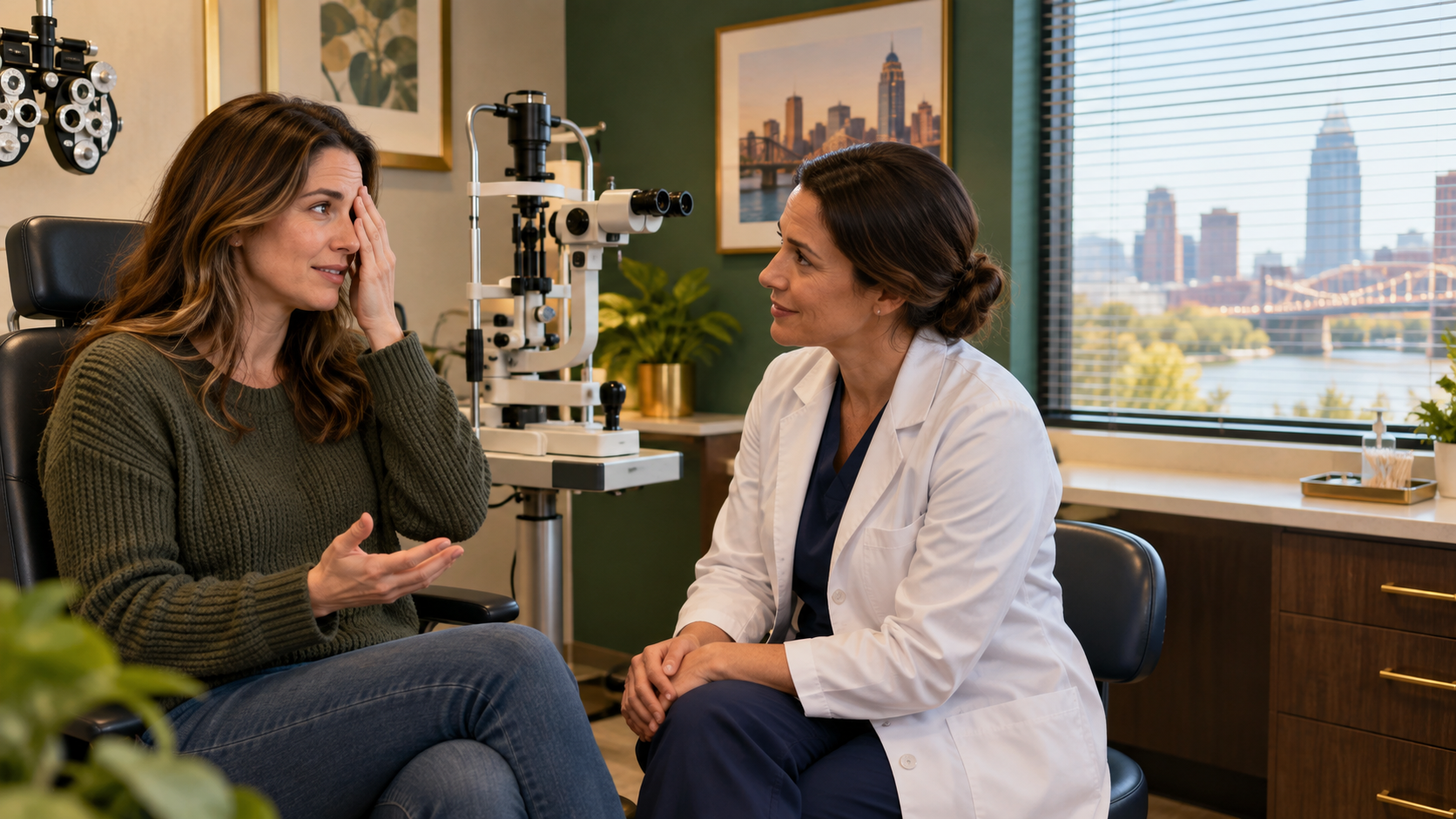
Eye Pain and Light Sensitivity: When It Is More Than Eye Strain
After a long day on screens, tired eyes may feel heavy, dry or mildly achy. But eye pain and light sensitivity in Cincinnati—especially when sudden, one-sided or accompanied by redness or blurred vision—should not automatically be blamed on computer use.
Pain and photophobia can occur with a scratched cornea, contact-lens infection, inflammation inside the eye, scleritis or a sudden pressure problem. These conditions can look similar without an examination, and several require prompt treatment.
Seek Emergency Care for These Combinations
Go to an emergency department or obtain immediate medical guidance for:
Intense eye pain with nausea, vomiting, headache, halos or blurred vision
Sudden vision loss, a new blind area, weakness, numbness or trouble speaking
Penetrating injury, severe blunt trauma or an object embedded in the eye
Chemical exposure—begin irrigation immediately before seeking care
A pupil that suddenly looks different after trauma or with severe symptoms
The National Eye Institute identifies intense eye pain, nausea, red eye and blurry vision as possible acute angle-closure glaucoma symptoms. That combination requires immediate care.
Same-Day Evaluation Is Appropriate for a Painful, Light-Sensitive Eye
Contact an eye-care professional promptly if pain or photophobia occurs with:
Redness in one or both eyes
Blurred or reduced vision
Excessive tearing or discharge
A foreign-body sensation that does not clear
Contact-lens wear
A recent scratch, fingernail injury, plant exposure or flying debris
New floaters or flashes
Symptoms that are worsening rather than improving
Do not use redness-relief drops or leftover antibiotics to postpone an examination. They may not treat the cause and can make the history harder to interpret. For chemical exposure, follow our separate guide to what to do when a chemical gets in the eye: begin rinsing immediately and do not delay irrigation to search for a special solution.
Possible Causes of Eye Pain and Photophobia
Corneal abrasion or foreign material
The cornea has many sensitive nerve endings, so even a small scratch can cause strong pain, tearing, blinking and light sensitivity. The American Optometric Association describes pain, tearing, blurred vision and photophobia as common corneal-abrasion symptoms. Fluorescein dye and a slit lamp can help the doctor see an abrasion or retained material.
Do not try to remove an embedded object with tweezers or another tool. If loose dust is present, gentle rinsing with clean water or sterile saline may help; persistent symptoms still need examination.
Contact-lens-related keratitis
A contact-lens wearer with worsening pain, redness, light sensitivity or sudden blur needs urgent evaluation. The CDC warns that microbial keratitis can lead to serious vision complications and advises removing the lenses and calling an eye doctor immediately when these symptoms occur.
Remove the lens if it comes out easily. Do not reinsert it, sleep in it or start wearing another lens. Keep the lens, case and solution available if the clinician asks to inspect them, but do not delay care to search for supplies.
Uveitis
Uveitis is inflammation inside the eye. According to the National Eye Institute, it may begin with eye pain, redness, light sensitivity, blurred vision or floaters. It can be related to infection, injury or systemic inflammatory disease, although the cause is not always identified.
Because untreated uveitis can threaten vision, steroid drops should never be borrowed or restarted without examination. Steroids can worsen certain infections and require clinical monitoring.
Scleritis
Scleritis is deeper inflammation involving the white coat of the eye. It may cause marked tenderness, redness, severe pain and light sensitivity and can be associated with autoimmune disease. The American Academy of Ophthalmology advises prompt evaluation for suspected scleritis.
Conjunctivitis and allergy
Many cases of pink eye are uncomfortable rather than truly painful. Itching is common with allergy, and discharge may occur with viral or bacterial conjunctivitis. However, the CDC recommends medical evaluation when pink eye includes pain, light sensitivity, persistent blur or intense redness. Those features can indicate something more serious than routine conjunctivitis.
Dry eye and digital eye strain
Dry eye may cause burning, grittiness, fluctuating blur and light sensitivity. Digital tasks can reduce blinking and aggravate the ocular surface. Yet severe, deep or rapidly worsening pain should not be labeled “dry eye” without evaluation. The National Eye Institute lists pain, redness, watering and light sensitivity among symptoms of several corneal conditions.
What an Urgent Eye Examination May Include
At See Well Eyecare, the evaluation is shaped by the history and symptoms. The doctor may check vision, pupils, eye movements, pressure and the front of the eye under magnification. Fluorescein dye can reveal corneal injury, while dilation may be appropriate when inflammation, retinal symptoms or internal eye disease is suspected.
The goal is to identify the cause before choosing treatment. Antibiotics, antivirals, anti-inflammatory medicines, lubricants, protective lenses or referral may be appropriate in different situations; they are not interchangeable.
Review our medical eye-exam services and urgent eye-care guidance.
What Contact-Lens Wearers Should Do
Stop lens wear when an eye becomes painful, red, unusually watery or light-sensitive. Wear backup glasses and seek advice. If you purchase your prescribed lenses and solutions through See Well, the product, prescription and follow-up remain connected to the team that evaluated the fit and corneal health. That gives you a local point of accountability when symptoms or product questions arise.
Safe lens wear still depends on following the prescribed replacement schedule and care instructions. A contact-lens examination is separate from a glasses refraction because the lens must be assessed on the eye.
Frequently Asked Questions
Can screen time cause eye pain and light sensitivity?
Screens can contribute to dryness, fatigue, headaches and focusing discomfort. Significant pain, marked redness, one-sided photophobia or reduced vision needs evaluation rather than assuming it is digital strain.
Is a painful red eye just pink eye?
Not necessarily. Conjunctivitis, corneal abrasion, keratitis, uveitis, scleritis and angle-closure glaucoma can all involve redness. Pain, light sensitivity and vision change increase the need for prompt professional assessment.
Should I patch a painful eye?
Do not patch it unless a clinician specifically directs you to do so. An examination should determine whether there is an abrasion, infection, foreign material or another cause.
Can I use leftover antibiotic or steroid drops?
No. The wrong medicine can delay diagnosis, cause side effects or worsen certain infections. Bring the bottles to the visit so the doctor knows what you have used.
What if I wear contact lenses?
Remove them if they come out easily, do not reinsert them and contact an eye doctor promptly. Pain and photophobia in a lens wearer can be a corneal-infection warning sign.
Can See Well treat every painful eye?
See Well evaluates many urgent anterior-eye and medical concerns. Some cases require emergency-department care, laboratory testing, imaging or referral to an ophthalmologist or other specialist. We help identify and coordinate the appropriate next step.
Explore Hyde Park & Nearby Neighborhoods
Our Hyde Park (45208) office is convenient to Oakley (45209) and Mariemont (45227), with free parking behind the building. When symptoms are urgent, call before traveling so the team can guide you to the appropriate setting.
Local Events & Attractions
The Hyde Park Square Sidewalk Sale is scheduled for Saturday, September 12. Enjoy the neighborhood event, and use sunglasses as needed for comfort—but do not rely on dark glasses to hide unexplained eye pain or significant photophobia.
Get the Right Level of Care
For new eye pain, light sensitivity, redness or blurred vision, contact See Well Eyecare for same-day guidance. For intense pain with nausea, sudden major vision loss, severe trauma, chemical exposure or neurologic symptoms, use emergency care immediately. If your symptoms are appropriate for office evaluation, request an appointment in Hyde Park.
About the Author
Dr. Rawzi Baik is the owner and optometrist at See Well Eyecare in Cincinnati. He earned his Doctor of Optometry degree from The Ohio State University College of Optometry and provides comprehensive and medical eye care, including urgent evaluations, contact-lens services, dry-eye treatment and specialty care. His patient-education approach focuses on recognizing warning signs early and matching each problem to the right level of care.
Primary keyword: eye pain and light sensitivity Cincinnati
Supporting keywords: painful red eye, photophobia, urgent eye care Cincinnati, contact lens eye pain, corneal abrasion, uveitis symptoms
Quick Links
Helpful Articles

All Eye Care Services
Eye care for every stage of life, from routine exams and contact lens fittings to dry eye care, myopia management and medical eye visits. Dr. Baik helps you understand your options and choose care that fits your needs.

Keep In Touch
For non-urgent questions or to learn more about our services, contact us today!

We are an LGBTQ+ friendly clinic that believes all people deserve quality eye care
- 3330 Erie Avenue, Suite 14
Cincinnati, OH 45208 - Phone: (513) 268-8748
- Fax: (513) 268-8758
- Monday 9:00am - 3:00pm
- Tuesday 8:00am - 7:00pm
- Wednesday Closed
- Thursday 8:00am - 5:00pm
- Friday 8:00am - 3:00pm
- Saturday 9:00am - 2:00pm
- Sunday Closed
- Monday
- Tuesday
- Wednesday
- Thursday
- Friday
- Saturday
- Sunday
- Monday
- Tuesday
- Wednesday
- Thursday
- Friday
- Saturday
- Sunday
© 2026 See Well Eyecare. All rights Reserved - Accessibility Statement - Privacy Policy - Terms & Conditions - Sitemap
Managed and Designed by 