
High Blood Pressure and Your Eyes: What the Retina Can Reveal
High Blood Pressure and Your Eyes: What the Retina Can Reveal
High blood pressure can affect small blood vessels throughout the body, including the retina—the light-sensitive tissue at the back of the eye. Because hypertension often causes no obvious symptoms, an eye examination may reveal vascular changes that a patient cannot feel.
A high blood pressure eye exam in Cincinnati does not replace medical blood-pressure checks. It adds information about the eyes and creates an opportunity for the optometrist and primary-care team to work from the same picture.
What Is Hypertensive Retinopathy?
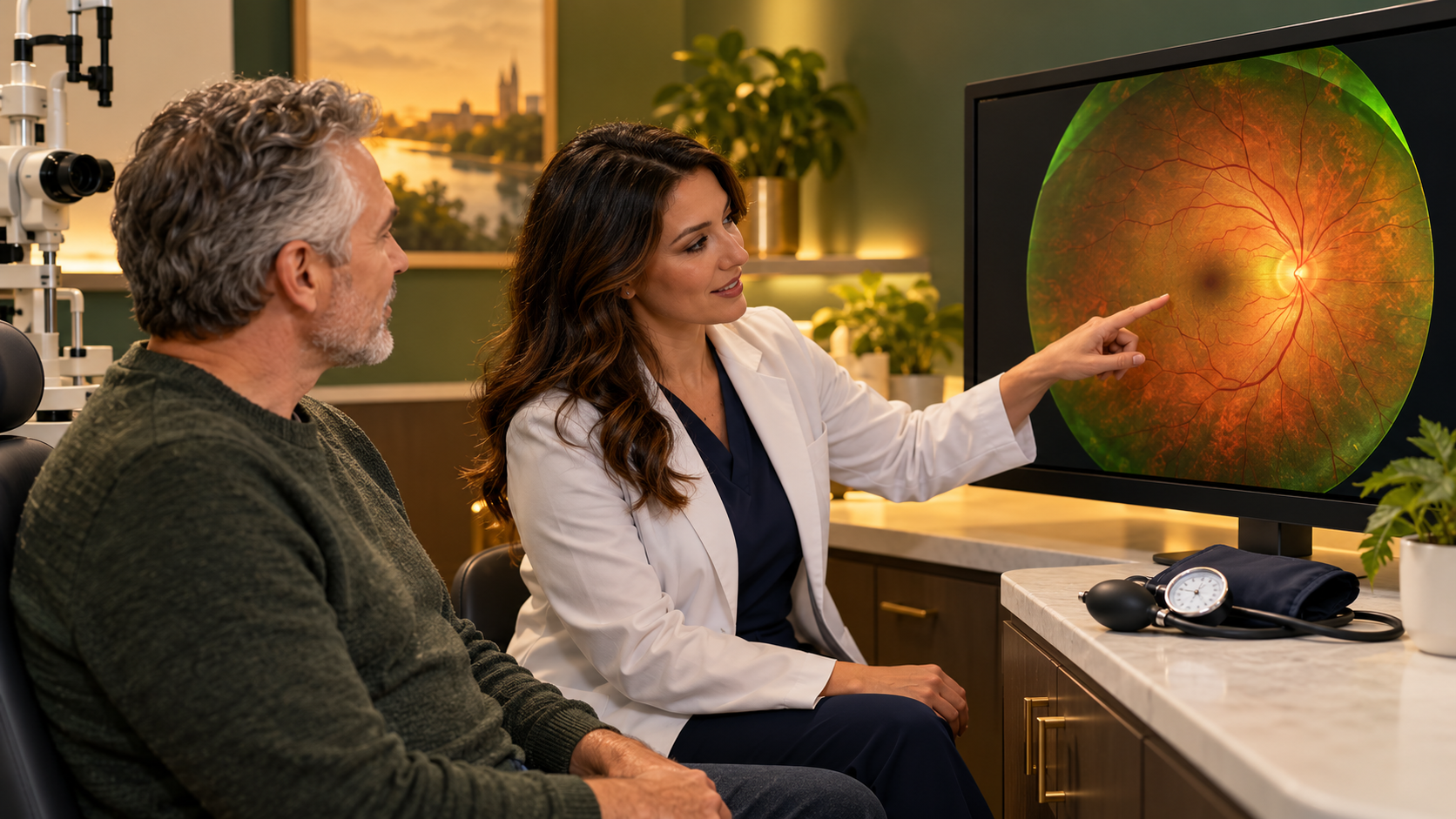
Hypertensive retinopathy describes retinal blood-vessel changes associated with elevated blood pressure. Depending on severity and duration, the doctor may see narrowed vessels, crossing changes, bleeding, cotton-wool spots, swelling or optic-nerve involvement.
The American Heart Association’s vision-loss guide explains that hypertension can damage retinal vessels and may contribute to other vascular eye problems.
Most mild changes do not create a symptom a patient can recognize. That is why the view through a dilated pupil matters.
What the Examination May Include
During a comprehensive eye examination, Dr. Baik reviews medications and medical history, measures vision and eye pressure, and examines the retina and optic nerve. Dilation may be recommended to obtain the necessary view.
Optomap imaging can document a broad retinal image and help compare future change. It is useful technology, but it does not automatically replace dilation or every specialized test. The examination determines what is appropriate.
The National Eye Institute’s dilated-exam guidance notes that many people with high blood pressure or diabetes need regular dilated eye examinations.
Hypertension, Diabetes and Cholesterol Can Overlap
Retinal health is not separated into neat boxes. High blood pressure and cholesterol can compound vascular risk in a person with diabetes. The NEI diabetic-retinopathy overview identifies high blood pressure and cholesterol as additional risk factors.
See Well provides diabetic eye examinations and can send findings to the medical clinician managing diabetes or hypertension when the patient authorizes communication.
What Happens if Changes Are Found?
The eye findings are documented, and Dr. Baik explains their significance and follow-up interval. More severe changes may require prompt medical evaluation, retinal consultation or emergency care. The eye doctor does not independently change blood-pressure medication; that decision belongs to the clinician managing the patient’s systemic health.
Managing blood pressure is central to reducing ongoing vascular injury. The American Heart Association’s blood-pressure overview provides current patient guidance on monitoring and treatment.
When Vision Changes and Blood Pressure Are an Emergency
Call 911 for a blood-pressure reading above 180/120 mm Hg accompanied by symptoms such as chest pain, shortness of breath, weakness, speech difficulty or vision change. The AHA’s hypertensive-emergency guidance explains this combination.
Sudden vision loss also requires immediate evaluation even without a known high reading. Do not drive yourself if stroke symptoms are possible.
Explore Hyde Park & Nearby Neighborhoods
See Well Eyecare serves patients from Hyde Park (45208), Oakley (45209), Walnut Hills (45207), Mount Lookout and across Cincinnati. Bring an updated medication list and the name of the clinician managing your blood pressure.
Local Events & Attractions | Hyde Park Farmers’ Market on October 25
The Cincinnati Parks calendar lists the Hyde Park Farmers’ Market on October 25. A healthy routine can support vascular care, but it does not substitute for prescribed medication, blood-pressure monitoring or a recommended eye examination.
Frequently Asked Questions
Can an eye doctor diagnose high blood pressure?
An eye doctor may see changes associated with hypertension, but a blood-pressure measurement and medical evaluation are needed to diagnose and manage hypertension.
Will hypertensive retinopathy blur my vision?
Mild changes may cause no symptoms. Severe or acute vascular changes can reduce vision and require urgent evaluation.
Does Optomap replace dilation?
Not always. Imaging and dilation provide different information. The doctor decides what the history and findings require.
How often should I have my eyes checked?
The interval depends on age, blood-pressure control, diabetes, prior retinal findings and other risk factors. Follow the plan set for your eyes.
Should I stop a blood-pressure medicine if my vision changes?
No. Do not stop medication without speaking with the prescribing clinician. Sudden vision change needs urgent assessment.
Connect Eye Findings With Medical Care
Request an appointment for a comprehensive or medically indicated retinal examination. Bring medication information and recent blood-pressure history so we can communicate useful findings to your care team.
About the Author
Dr. Rawzi Baik is the owner and optometrist at See Well Eyecare, an independent Hyde Park practice. He earned his Doctor of Optometry degree from The Ohio State University and provides comprehensive and medical eye care with clear communication and coordinated referral.
Primary keyword: high blood pressure eye exam Cincinnati
Supporting keywords: hypertensive retinopathy Cincinnati, retinal exam Hyde Park, dilated eye exam Oakley, blood pressure vision changes, medical eye care Cincinnati
Quick Links
Helpful Articles

All Eye Care Services
Eye care for every stage of life, from routine exams and contact lens fittings to dry eye care, myopia management and medical eye visits. Dr. Baik helps you understand your options and choose care that fits your needs.

Keep In Touch
For non-urgent questions or to learn more about our services, contact us today!

We are an LGBTQ+ friendly clinic that believes all people deserve quality eye care
- 3330 Erie Avenue, Suite 14
Cincinnati, OH 45208 - Phone: (513) 268-8748
- Fax: (513) 268-8758
- Monday 9:00am - 3:00pm
- Tuesday 8:00am - 7:00pm
- Wednesday Closed
- Thursday 8:00am - 5:00pm
- Friday 8:00am - 3:00pm
- Saturday 9:00am - 2:00pm
- Sunday Closed
- Monday
- Tuesday
- Wednesday
- Thursday
- Friday
- Saturday
- Sunday
- Monday
- Tuesday
- Wednesday
- Thursday
- Friday
- Saturday
- Sunday
© 2026 See Well Eyecare. All rights Reserved - Accessibility Statement - Privacy Policy - Terms & Conditions - Sitemap
Managed and Designed by 