
High Eye Pressure Does Not Always Mean Glaucoma: What Cincinnati Patients Should Know
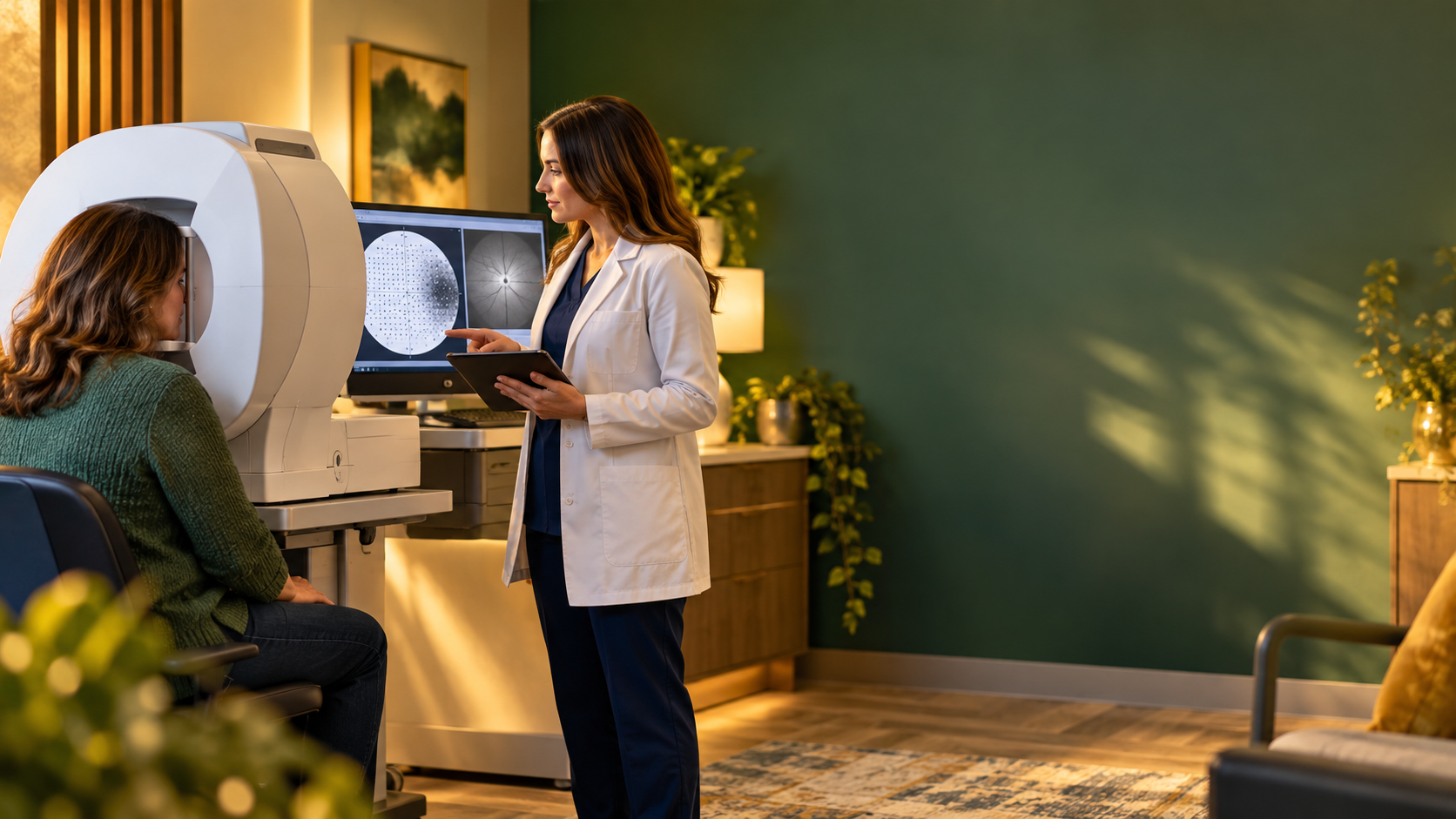
High Eye Pressure Does Not Always Mean Glaucoma: What Cincinnati Patients Should Know
Hearing that your eye pressure is “high” can be unsettling. The important next step is not to assume the worst or ignore the result. It is to understand what the number means alongside the health of the optic nerve, your visual field, corneal thickness, family history and changes over time.
The National Eye Institute’s explanation of glaucoma and eye pressure makes an important distinction: elevated pressure increases glaucoma risk, but some people have high pressure without optic-nerve damage, while others develop glaucoma at pressures that are not unusually high.
That is why high eye pressure testing in Cincinnati should be a thoughtful process rather than a single-number verdict.
Eye Pressure Is One Piece of the Glaucoma Puzzle
Eye pressure—also called intraocular pressure or IOP—is created by the balance between fluid production and drainage inside the eye. Tonometry measures that pressure at a moment in time.
Readings can vary with time of day, corneal characteristics, measurement method, squeezing the eyelids and other factors. A repeat measurement may be useful when a result is unexpected.
Ocular hypertension generally describes pressure that is higher than expected without detectable glaucoma damage. It is a risk state, not the same diagnosis as glaucoma.
What Makes Someone a “Glaucoma Suspect”?
A person may be monitored as a glaucoma suspect because of:
- repeatedly elevated eye pressure;
- a suspicious optic-nerve appearance;
- an unusual or repeatable visual-field finding;
- corneal thickness that changes how a pressure reading is interpreted;
- strong family history;
- previous eye injury, surgery or steroid exposure; or
- another combination of risk factors.
The American Academy of Ophthalmology’s glaucoma-suspect guidance emphasizes that suspicion can arise from pressure, optic-nerve structure or visual-field findings. No single finding should be interpreted outside the complete examination.
Which Tests May Be Needed?
Depending on the history and findings, a glaucoma evaluation may include:
- repeat tonometry;
- careful optic-nerve examination;
- visual-field testing to map peripheral vision;
- corneal-thickness measurement;
- examination of the drainage angle when indicated;
- retinal or optic-nerve photography for comparison; and
- referral for imaging or specialist evaluation when additional information is needed.
See Well Eyecare has visual-field testing and Optomap imaging available when clinically appropriate. Optomap can document a broad retinal view, but it is not a substitute for every form of glaucoma imaging. When OCT, treatment or a surgical opinion is needed, Dr. Baik coordinates referral rather than implying that one office test answers every question.
Does Every Elevated Reading Need Treatment?
No. The decision depends on the estimated risk of future damage, not pressure alone. The NEI-supported Ocular Hypertension Treatment Study showed why risk-based care matters: some higher-risk patients benefit from pressure-lowering treatment, while careful observation may be reasonable for others.
Observation is still active care. It means returning on the recommended schedule so the doctor can compare pressure, optic nerves and visual fields. Missing follow-up removes the very information needed to tell whether the eye is stable.
Glaucoma Usually Does Not Announce Itself Early
Common open-angle glaucoma often develops without pain or obvious early symptoms. The NEI glaucoma overview explains why dilated examinations and risk-based follow-up are important before a person notices lost side vision.
Sudden intense eye pain, redness, blurred vision, halos, headache, nausea or vomiting is different. The NEI’s glaucoma emergency guidance identifies these as possible signs of acute angle closure. Seek emergency care immediately rather than waiting for a routine appointment.
What to Bring to a Pressure-Recheck Visit
Bring:
- the names and doses of all medications, including steroid drops, inhalers, creams and pills;
- prior eye records or testing when available;
- a family history of glaucoma or unexplained vision loss;
- your current glasses and contact-lens information; and
- questions about what changed and when the next comparison is needed.
A comprehensive eye examination establishes a useful baseline even when the visit began as a routine prescription check.
Explore Hyde Park & Nearby Neighborhoods
See Well Eyecare is located in Hyde Park (45208), near Oakley (45209), Mount Lookout and Columbia-Tusculum. For patients who need serial pressure checks or visual-field comparisons, a familiar local office makes it easier to keep testing connected over time.
Local Events & Attractions | Cincinnati Parks on October 16
The official Cincinnati Parks events calendar lists fall programming on October 16. If a busy event week makes it tempting to postpone a recommended pressure recheck, remember that glaucoma monitoring is most useful when comparisons happen on schedule.
Frequently Asked Questions
Is 21 mmHg automatically glaucoma?
No. A number alone does not diagnose glaucoma. The doctor considers repeat readings, corneal thickness, optic-nerve appearance, visual fields and individual risk factors.
Can glaucoma happen with normal eye pressure?
Yes. Some people develop optic-nerve damage even when measured pressure is within a commonly observed range.
Can thick or thin corneas affect the reading?
Corneal thickness can influence how pressure measurements are interpreted, which is why pachymetry may be part of a glaucoma-suspect evaluation.
Will Optomap rule out glaucoma?
No. Optomap can document the retina and optic-nerve region, but glaucoma assessment may require additional examination, visual-field testing and specialized imaging.
If I feel fine, can I wait until next year?
Follow the interval recommended for your findings. Early glaucoma often has no noticeable symptoms, so feeling fine does not prove that the optic nerve is unchanged.
Schedule a Glaucoma-Risk Evaluation
If you were told that your pressure is elevated, your optic nerves look suspicious or a visual-field result needs repeating, request an appointment. Bring prior records when possible so Dr. Baik can compare rather than restart the story from zero.
About the Author
Dr. Rawzi Baik is the owner and optometrist at See Well Eyecare, an independent Hyde Park practice serving Cincinnati. He earned his Doctor of Optometry degree from The Ohio State University and provides comprehensive and medical eye care with clear explanations, individualized monitoring and timely referral when advanced testing or treatment is needed.
Primary keyword: high eye pressure Cincinnati
Supporting keywords: glaucoma suspect Cincinnati, ocular hypertension, glaucoma testing Hyde Park, visual field testing Cincinnati, eye pressure check Oakley
Quick Links
Helpful Articles

All Eye Care Services
Eye care for every stage of life, from routine exams and contact lens fittings to dry eye care, myopia management and medical eye visits. Dr. Baik helps you understand your options and choose care that fits your needs.

Keep In Touch
For non-urgent questions or to learn more about our services, contact us today!

We are an LGBTQ+ friendly clinic that believes all people deserve quality eye care
- 3330 Erie Avenue, Suite 14
Cincinnati, OH 45208 - Phone: (513) 268-8748
- Fax: (513) 268-8758
- Monday 9:00am - 3:00pm
- Tuesday 8:00am - 7:00pm
- Wednesday Closed
- Thursday 8:00am - 5:00pm
- Friday 8:00am - 3:00pm
- Saturday 9:00am - 2:00pm
- Sunday Closed
- Monday
- Tuesday
- Wednesday
- Thursday
- Friday
- Saturday
- Sunday
- Monday
- Tuesday
- Wednesday
- Thursday
- Friday
- Saturday
- Sunday
© 2026 See Well Eyecare. All rights Reserved - Accessibility Statement - Privacy Policy - Terms & Conditions - Sitemap
Managed and Designed by 