
IPL for Dry Eye in Cincinnati: What to Expect Before, During and After Treatment
IPL for Dry Eye in Cincinnati: What to Expect Before, During and After Treatment
If warm compresses and artificial tears provide only temporary relief, the missing piece may be the eyelid oil glands. Meibomian glands produce the tear film’s outer lipid layer. When those glands are obstructed or inflamed, tears can evaporate too quickly, causing burning, fluctuating vision, redness, watering and contact-lens discomfort.
Intense pulsed light—usually shortened to IPL—is one in-office treatment that may help selected patients with meibomian-gland dysfunction and evaporative dry eye. It is not a universal dry-eye treatment, a cosmetic add-on or a substitute for diagnosis.
Patients considering IPL dry-eye treatment in Cincinnati should begin with a focused evaluation. The goal is to determine what is driving the symptoms, whether IPL fits that pattern and what other care needs to accompany it.
What IPL Is—and What It Is Not
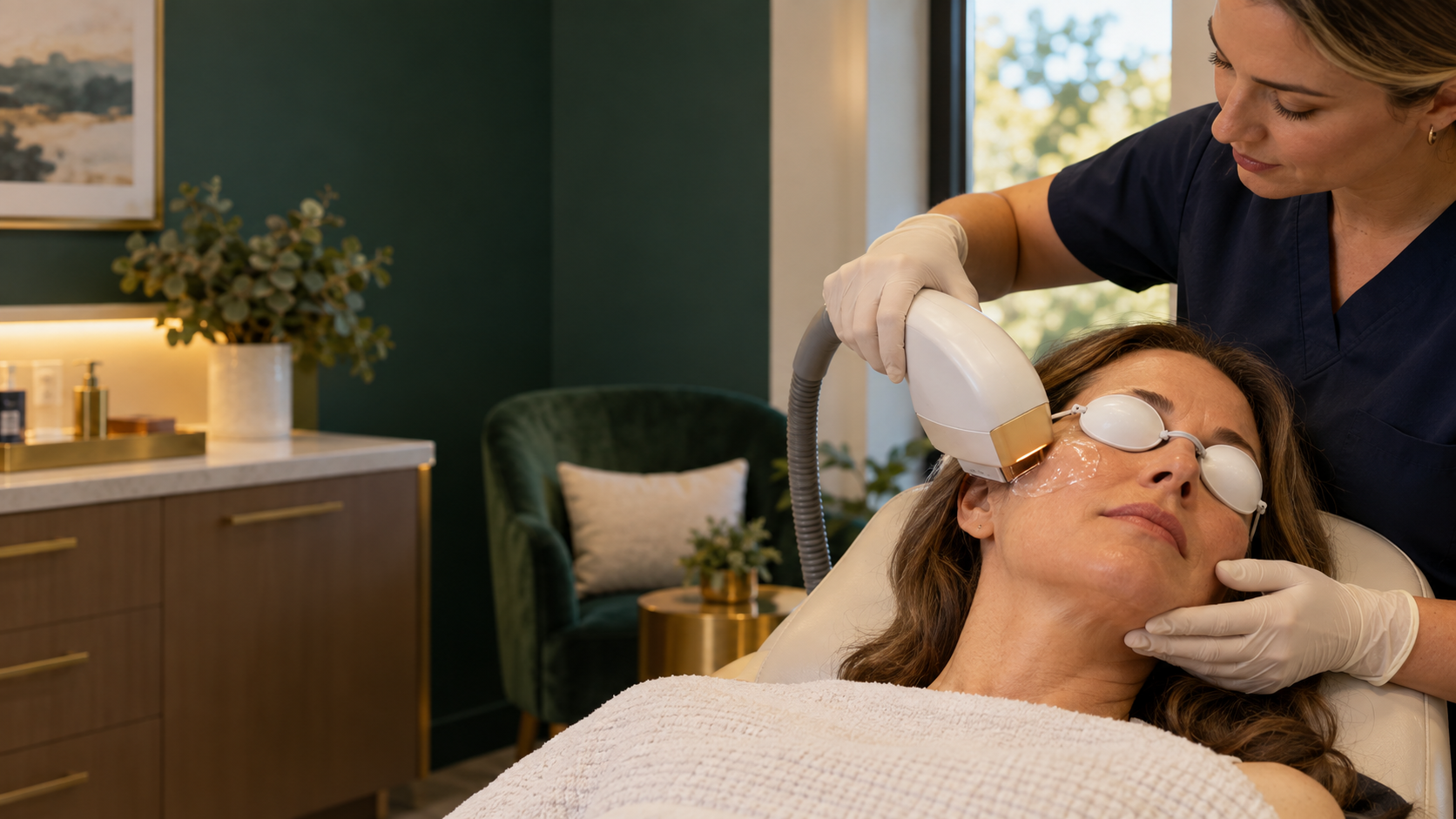
IPL uses controlled pulses of broad-spectrum light applied to the skin in the treatment area while the eyes are protected. The FDA classifies prescription IPL devices for managing dry eye as devices used for patients with dry-eye disease due to meibomian-gland dysfunction, also called evaporative or lipid-deficiency dry eye.
IPL is not aimed into the eye. It is not laser vision correction and does not change an eyeglass prescription. Proposed benefits include reducing abnormal superficial blood vessels and inflammatory signaling, warming meibomian-gland contents and improving the environment around the eyelids. The exact response varies.
The 2025 TFOS DEWS III Management and Therapy report includes IPL among office-based options for meibomian-gland dysfunction while emphasizing diagnosis-driven, individualized care.
Why the Meibomian Glands Matter
The tear film has interdependent oil, water and mucin layers. A weak oil layer allows the watery component to evaporate too quickly. Patients may paradoxically experience excess watering because irritation triggers reflex tears.
The American Academy of Ophthalmology explains that meibomian-gland dysfunction occurs when the eyelid’s oil-producing glands become blocked or function poorly. Common clues include:
- burning or gritty eyes;
- fluctuating clarity that changes after blinking;
- lid-margin redness or visible small vessels;
- thick or poor-quality gland secretions;
- symptoms worsened by screens, wind or heating; and
- contact lenses becoming uncomfortable earlier in the day.
These symptoms can also occur with allergy, aqueous-deficient dry eye, blepharitis, Demodex, medication effects and corneal disease. That overlap is why treatment should follow an examination.
What Happens at the Dry-Eye Evaluation
At a See Well dry-eye evaluation, the doctor may assess symptoms, medication history, blink, eyelid margins, tear stability, corneal staining and meibomian-gland function. Testing is selected for the individual rather than performed as an identical package for everyone.
Before IPL, tell the doctor about:
- pregnancy or nursing;
- seizure or light-sensitivity history;
- active skin disease, wounds or infection near the treatment area;
- recent tanning or significant sun exposure;
- photosensitizing medications and supplements;
- prior light-based or cosmetic procedures; and
- any previous reaction to light treatment.
These details do not automatically rule out treatment, but they affect safety and planning. The device instructions, skin characteristics, medical history and examination findings determine candidacy.
What an IPL Session Usually Feels Like
The exact protocol depends on the prescribed system and treatment plan. In general:
- The skin is cleaned and protective eye shields are positioned.
- A cooling or coupling gel may be applied.
- The clinician delivers a planned series of light pulses to the skin around the treatment region.
- Patients often describe a brief warm snap or flicking sensation with each pulse.
- Gel is removed and the skin and eyes are rechecked.
- Meibomian-gland expression may be performed when it is part of the prescribed protocol.
A randomized controlled study published in *Ocular Surface* found that IPL combined with meibomian-gland expression improved signs and symptoms in selected patients with moderate-to-severe meibomian-gland dry eye. Another double-masked, sham-controlled clinical trial also evaluated safety and efficacy for MGD. These studies support IPL as a clinical option; they do not guarantee that every patient will respond.
How Many Sessions Are Needed?
IPL is generally planned as a series rather than a single visit. At See Well, three to four sessions are common, but the number and spacing are individualized according to findings, response and the specific protocol. Some patients later benefit from maintenance; others need a different approach.
Expectations should be measured over time. Some people notice comfort improvements early, while gland function and inflammation may change more gradually. A 2025 randomized controlled study of a newer IPL system adds to the evidence base, but no study can predict an individual result with certainty.
What to Expect After Treatment
Temporary warmth, redness or skin sensitivity may occur. Follow the specific post-care instructions provided for your treatment. These may include sun protection and avoiding selected skin products or procedures for a period of time.
Contact the practice promptly for unexpected blistering, marked swelling, increasing pain, a major vision change or another symptom outside the anticipated response. IPL should be administered by trained professionals using appropriate eye protection and a protocol suited to the patient.
IPL Is Usually One Part of a Larger Plan
Dry-eye care may also involve:
- a carefully selected lubricating or lipid-supporting drop;
- lid hygiene or a properly heated mask;
- prescription anti-inflammatory medication;
- treatment for Demodex or allergy when present;
- contact-lens material or wear-schedule changes;
- punctal occlusion, serum tears or amniotic membrane for selected cases; and
- environmental and blink strategies.
See Well offers several advanced options, but “more treatments” is not automatically better. Each recommendation should have a clear reason. When a specific drop, mask, lid product or supplement is recommended and purchased through the practice, the instructions, authentic supply channel and troubleshooting stay connected to the examination. That continuity does not guarantee a medical result.
Contact Lenses and IPL
Improving the ocular surface may help some patients tolerate contact lenses more comfortably, but IPL does not replace an annual lens evaluation. Lens material, fit, deposits, prescription and wear time still matter.
Bring your lens boxes and usual wearing schedule to a contact-lens examination. The goal is to coordinate the prescribed lens with the health of the cornea and eyelids.
Who May Need a Different Dry-Eye Approach?
IPL is designed for a particular clinical pattern. A patient whose symptoms mainly come from aqueous tear deficiency, allergy, neuropathic pain, exposure, medication toxicity or another corneal condition may need a different plan. Even patients with MGD may have important coexisting causes.
That is why an online checklist cannot determine candidacy. A proper diagnosis protects patients from investing time in a procedure that does not match the main driver of disease.
Explore Hyde Park & Nearby Neighborhoods
See Well Eyecare provides advanced dry-eye care in Hyde Park (45208), close to Oakley (45209), Mariemont (45227) and Columbia-Tusculum. The practice combines examination, ocular-surface products, prescription care and in-office treatment in one local setting.
Local Events & Attractions | Hyde Park Square Art Show
The Hyde Park Square Art Show returns Sunday, October 4. If wind, sunlight or hours outdoors make your eyes burn or water, sunglasses and planned breaks may help—but repeated symptoms still deserve a dry-eye evaluation. Follow any sun-exposure instructions carefully if you are receiving IPL.
Frequently Asked Questions
Is IPL a laser?
No. IPL delivers broad-spectrum pulses of light; it is different from a laser and does not reshape the cornea or correct an eyeglass prescription.
Does IPL work for every kind of dry eye?
No. It is primarily considered for selected patients with meibomian-gland dysfunction and evaporative dry eye. Other causes require different or additional treatment.
Does IPL hurt?
Patients commonly describe brief warmth or a snapping sensation. Comfort varies, and protective measures and treatment parameters are individualized.
How many IPL treatments will I need?
Three to four sessions are common at See Well, but the plan may differ based on the examination, protocol and response. Maintenance is not required for everyone.
Can I wear contact lenses after IPL?
Follow the instructions given for your session. Contact-lens wear should also be guided by corneal findings, comfort and fit—not by IPL alone.
How can I find out whether I am a candidate?
Request a dry-eye appointment and include your symptoms, previous treatments, skin history, medications and contact-lens use.
About See Well Eyecare
See Well Eyecare is an independent optometry and optical practice in Hyde Park, Cincinnati. Dr. Rawzi Baik provides comprehensive and medical eye care, dry-eye evaluation and advanced treatment with an emphasis on diagnosis, education and individualized planning.
Start With the Diagnosis
If drops and warm compresses are not solving the problem, the next step is not automatically a stronger product or a procedure. Schedule a dry-eye evaluation to identify the main driver and learn whether IPL belongs in your plan.
Primary keyword: IPL dry eye treatment Cincinnati Supporting keywords: intense pulsed light dry eye, meibomian gland dysfunction Cincinnati, evaporative dry eye treatment, IPL treatment expectations, Hyde Park dry eye doctor
Quick Links
Helpful Articles

All Eye Care Services
Eye care for every stage of life, from routine exams and contact lens fittings to dry eye care, myopia management and medical eye visits. Dr. Baik helps you understand your options and choose care that fits your needs.

Keep In Touch
For non-urgent questions or to learn more about our services, contact us today!

We are an LGBTQ+ friendly clinic that believes all people deserve quality eye care
- 3330 Erie Avenue, Suite 14
Cincinnati, OH 45208 - Phone: (513) 268-8748
- Fax: (513) 268-8758
- Monday 9:00am - 3:00pm
- Tuesday 8:00am - 7:00pm
- Wednesday Closed
- Thursday 8:00am - 5:00pm
- Friday 8:00am - 3:00pm
- Saturday 9:00am - 2:00pm
- Sunday Closed
- Monday
- Tuesday
- Wednesday
- Thursday
- Friday
- Saturday
- Sunday
- Monday
- Tuesday
- Wednesday
- Thursday
- Friday
- Saturday
- Sunday
© 2026 See Well Eyecare. All rights Reserved - Accessibility Statement - Privacy Policy - Terms & Conditions - Sitemap
Managed and Designed by 