
Low-Dose Atropine for Childhood Myopia in Cincinnati
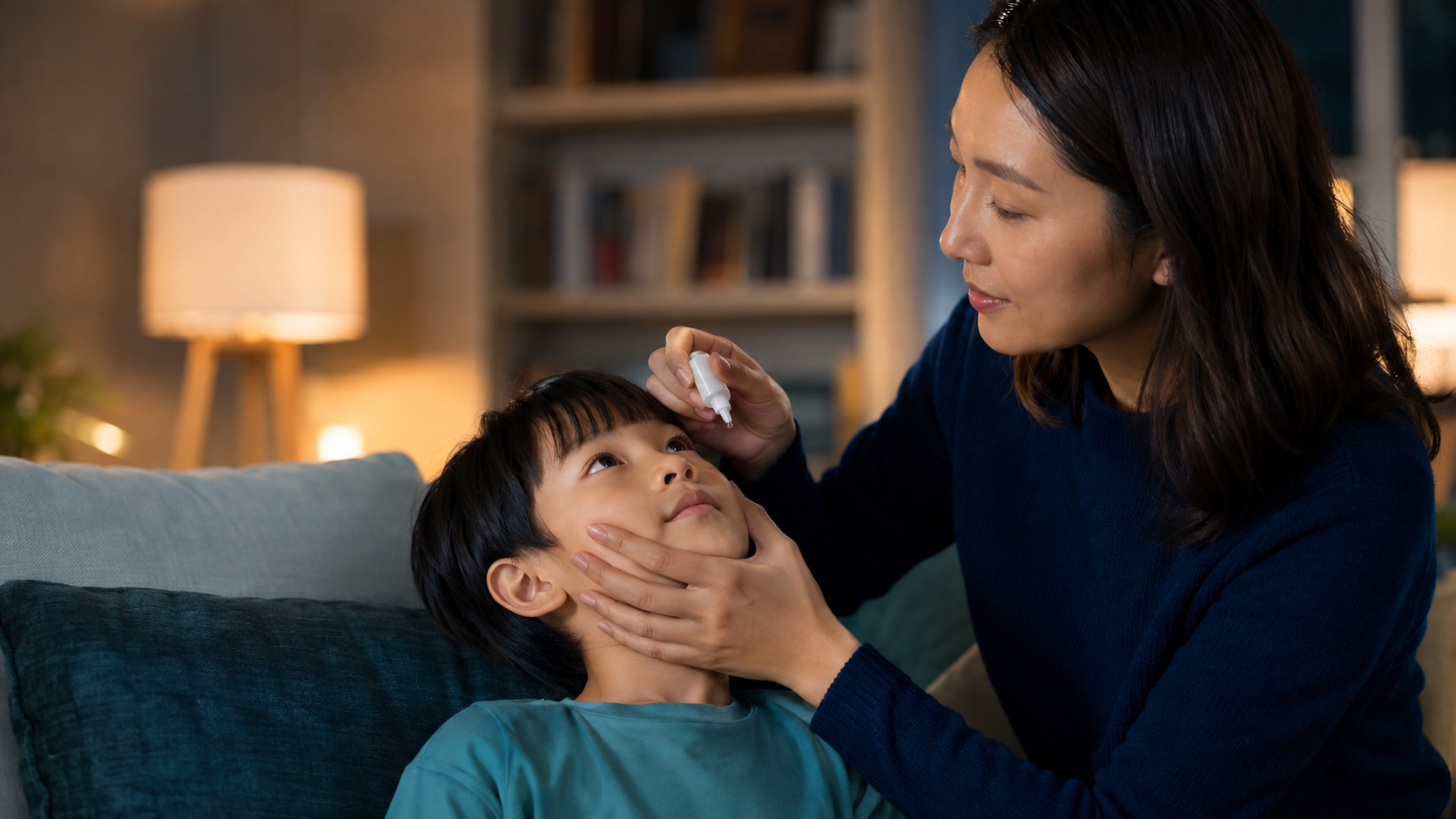
Low-Dose Atropine for Childhood Myopia Management
For some children with progressive myopia, a prescription eye drop may be considered as part of an individualized plan. Low-dose atropine is used by eye doctors to help slow childhood myopia progression, sometimes on its own and sometimes in combination with an optical treatment.
At See Well Eyecare, Dr. Rawzi Baik does not select atropine based on prescription alone. We consider the child’s age, rate of change, axial-length growth, family history, symptoms, lifestyle, and ability to follow a long-term monitoring plan.
What Is Atropine?
Atropine is a medication that affects receptors in the eye. At full clinical strength, it dilates the pupil and temporarily reduces focusing ability. Lower concentrations are used in myopia management to seek a meaningful slowing effect while reducing—though not eliminating—light sensitivity and near-vision symptoms.
The precise biological mechanism responsible for the myopia-control effect is not fully established. The treatment is intended to slow future progression; it does not remove existing myopia or replace vision correction when glasses or contacts are needed.
Is Low-Dose Atropine FDA-Approved for Myopia Control?
No atropine eye-drop product currently has FDA approval specifically for slowing childhood myopia in the United States. When prescribed for this purpose, atropine is used off label. Off-label prescribing is a recognized part of medical practice, but families deserve a clear explanation of what that means, the available evidence, the uncertainty, possible side effects, and reasonable alternatives.
Concentration matters. A large U.S. randomized trial found that 0.01% atropine was no better than placebo over two years, while studies in other populations have reported dose-dependent benefit with concentrations such as 0.025% and 0.05%. The evidence should not be reduced to the statement that every “low dose” works the same way for every child.
Which Children May Benefit?
Atropine may be considered when a child:
Has documented prescription or axial-length progression.
Developed myopia at a young age.
Has one or two myopic parents.
Has a family history of high myopia or myopia-related retinal disease.
Is not ready or eligible for a particular contact-lens or spectacle treatment.
Continues to progress despite another treatment.
May benefit from combination therapy after an individualized review.
Children with certain eye conditions, medication sensitivities, or medical considerations may not be candidates. A complete medication and health history is important.
Why Axial Length Is Important
Prescription changes tell us how the eye focuses. Axial length tells us how the eye is growing. Because excessive axial elongation is a central concern in progressive myopia, measuring both can provide a more complete picture.
See Well Eyecare uses the Topcon MYAH to establish a baseline and monitor change. The Brian Holden Vision Institute Myopia Calculator may also help us illustrate population-based progression scenarios. It is not a diagnostic test and cannot guarantee a child’s future prescription.
What Happens During the Dedicated Consultation?
A comprehensive eye exam evaluates overall vision and ocular health. A dedicated myopia-management consultation is a separate visit focused on candidacy and treatment planning.
It may include:
Review of previous prescriptions and the pace of progression.
Axial-length measurement with the Topcon MYAH.
Pupil, focusing, and binocular-vision assessment.
Slit-lamp and ocular-health evaluation.
Corneal topography when another treatment is being considered.
Review of family history, screen time, near work, and outdoor activity.
Discussion of atropine concentration, formulation, use, storage, and monitoring.
Comparison with Stellest, MiSight, Ortho-K, or combination strategies when appropriate.
What Does Treatment Involve?
Atropine is generally prescribed on a regular schedule, often as one drop in each treated eye in the evening. The exact concentration and instructions are determined by the prescriber. Families should follow the label provided by the pharmacy and office rather than changing concentration or frequency on their own.
Because commercially available formulations may not match the concentration selected for myopia management, a compounded preparation may be used. Compounded medications are not FDA-approved finished drug products. Pharmacy quality, beyond-use date, storage instructions, and bottle handling therefore deserve attention.
Possible Side Effects
Side effects vary with concentration and the individual child. They may include:
Larger pupils or light sensitivity.
Difficulty focusing at near.
Blurred near vision or headache.
Eye irritation or allergic reaction.
Rare systemic effects such as flushing, dry mouth, fever, rapid heartbeat, or behavioral changes.
Families should contact the prescribing office about persistent ocular symptoms. Urgent medical guidance is appropriate for a suspected serious reaction, breathing difficulty, pronounced confusion, or other severe systemic symptoms.
Photochromic lenses, sunglasses, or a near addition may occasionally be considered when symptoms warrant, but many children using lower concentrations function without them.
Monitoring and Follow-Up
Follow-up is individualized and may include visits within the first few months and then at regular intervals. We assess adherence, side effects, visual acuity, prescription, pupil and focusing response, ocular health, and axial-length change.
If progression remains faster than expected, we may discuss adherence, concentration, an optical treatment, or combination therapy. If treatment is eventually stopped, continued monitoring is important because rebound progression can occur, particularly after higher concentrations or in younger children.
Lifestyle Still Matters
Medication does not make visual habits irrelevant. Children should take regular breaks from sustained near work, avoid holding screens or books unnecessarily close, use appropriate lighting, and spend consistent time outdoors when health, weather, and family circumstances allow. Outdoor time is beneficial, but it should not be presented as a guaranteed substitute for treatment in a child with established progressive myopia.
Frequently Asked Questions
Will atropine improve my child’s distance vision?
Atropine is intended to slow progression, not correct existing blur. Most children still need glasses or contact lenses.
Is 0.01% always the best starting concentration?
No. Evidence differs by concentration and study population. A U.S. trial did not find 0.01% superior to placebo. The choice should be individualized.
Is atropine safe for long-term use?
Low concentrations have generally been well tolerated in clinical studies, but long-term treatment still requires prescribing oversight, side-effect review, and eye-health monitoring.
Can atropine be combined with Stellest, MiSight, or Ortho-K?
Sometimes. Combination therapy may be discussed for selected children, especially when progression remains concerning, but more treatment is not automatically better.
How long will my child use it?
There is no single duration for every child. Treatment and any tapering or discontinuation plan depend on age, stability, axial growth, response, and risk of rebound.
About See Well Eyecare
See Well Eyecare is an independent Hyde Park optometry practice led by Dr. Rawzi Baik. We combine detailed education with axial-length monitoring and individualized treatment recommendations. Our goal is to help parents understand both the potential benefit and the limitations of an off-label medication before deciding.
Explore Hyde Park & Nearby Neighborhoods
Our office on Erie Avenue is convenient to Hyde Park, Mount Lookout, and Columbia-Tusculum. Families have free parking and easy access from nearby schools, parks, and residential neighborhoods.
Local Events & Attractions
Families visiting the area can explore Ault Park, the Cincinnati Observatory, Wasson Way, Hyde Park Square, and neighborhood festivals or farmers’ markets offered throughout the year. Verify event schedules before making plans.
Schedule a Low-Dose Atropine Consultation
If your child’s myopia is increasing, schedule a dedicated myopia-management consultation with See Well Eyecare. We will review progression, measure axial length, discuss the evidence and off-label status of low-dose atropine, and determine whether drops alone, an optical treatment, or a monitored combination best fits your child.
Myopia Management in Cincinnati
Quick Links
Helpful Articles

All Eye Care Services
Find personalized eye care excellence with our comprehensive services. From eye exams to advanced diagnostics, trust us for all your vision needs.

Keep In Touch
For non-urgent questions or to learn more about our services, contact us today!

We are an LGBTQ+ friendly clinic that believes all people deserve quality eye care
- 3330 Erie Avenue, Suite 14
Cincinnati, OH 45208 - Phone: (513) 268-8748
- Fax: (513) 268-8758
- Monday 9:00am - 3:00pm
- Tuesday 11:00am - 7:00pm
- Wednesday Closed
- Thursday 9:00am - 4:00pm
- Friday 8:00am - 5:00pm
- Saturday 9:00am - 3:00pm
- Sunday Closed
- Monday
- Tuesday
- Wednesday
- Thursday
- Friday
- Saturday
- Sunday
- Monday
- Tuesday
- Wednesday
- Thursday
- Friday
- Saturday
- Sunday
© 2026 See Well Eyecare. All rights Reserved - Accessibility Statement - Privacy Policy - Sitemap
Managed and Designed by 