
Migraine, Ocular Migraine or an Eye Emergency? When Vision Symptoms Need Attention
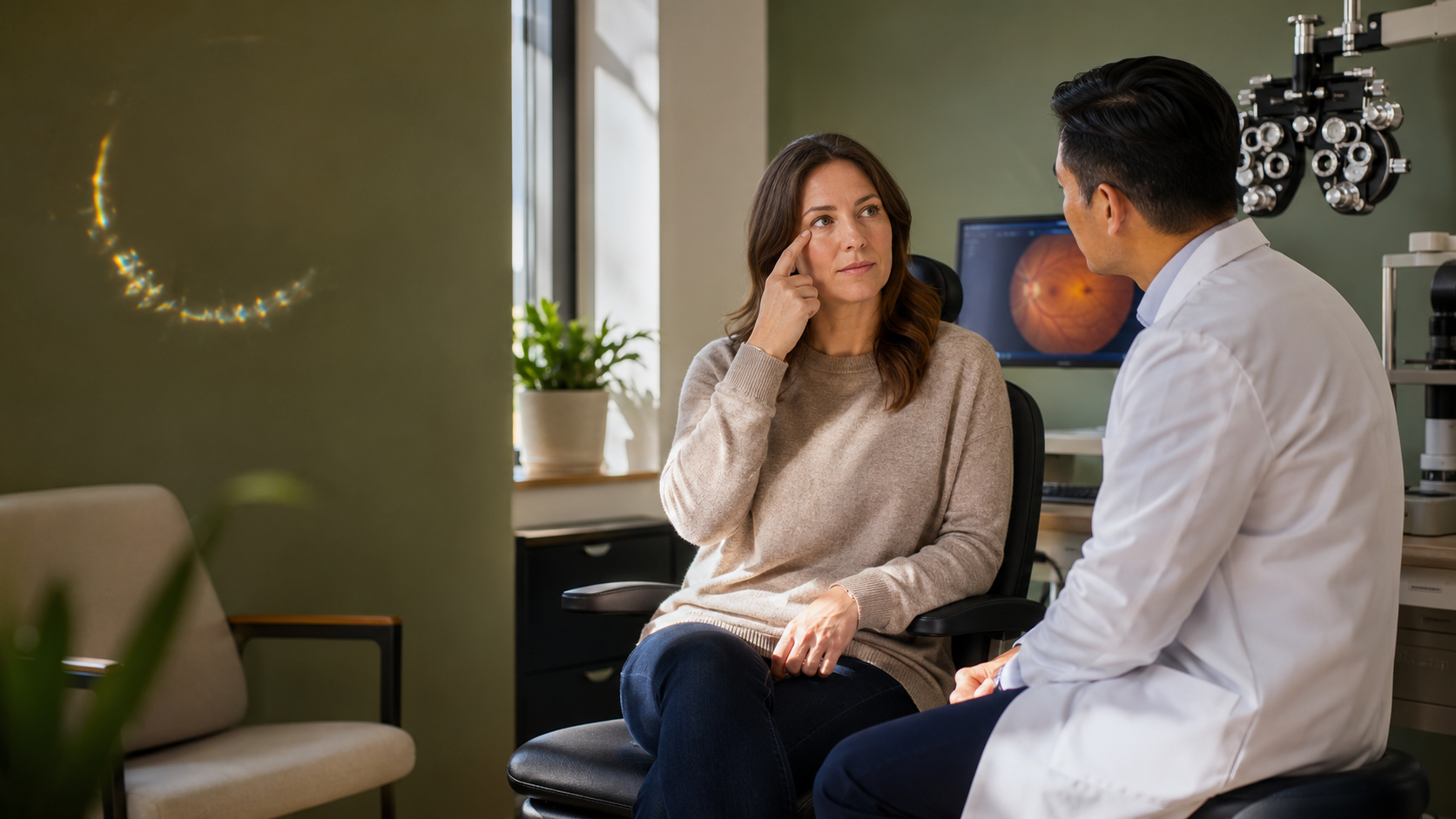
Migraine, Ocular Migraine or an Eye Emergency? When Vision Symptoms Need Attention
Flashing lights. Shimmering zigzags. A growing blind spot. Blurry vision followed by a headache.
These symptoms can happen with migraine, but they should not automatically be labeled an “ocular migraine.” A retinal tear, retinal detachment, circulation problem or neurologic emergency can sometimes begin with similar changes.
The safest first question is not, “Is this just a migraine?” It is, “Is this new, different, affecting one eye or accompanied by another warning sign?”
At See Well Eyecare in Hyde Park, Dr. Rawzi Baik evaluates new vision symptoms for patients throughout Cincinnati, Oakley, Mount Lookout, Mariemont and nearby communities. This guide explains the language people commonly use, what information to notice and when urgent care matters.
What People Mean by “Ocular Migraine”
“Ocular migraine” is used casually to describe several different experiences. That can create confusion.
Migraine with visual aura
A visual aura comes from activity in the brain’s visual system. People may see:
Shimmering or sparkling areas
Zigzag or wavy lines
A blind spot that slowly changes or expands
A kaleidoscope-like pattern
Distorted or temporarily blurred vision
Because the source is in the brain, the disturbance usually involves the visual field of both eyes—even when it seems stronger on one side. An aura can happen before a headache, during one or without any headache at all.
Retinal migraine
Retinal migraine is different and much less common. It causes temporary visual disturbance or vision loss in one eye. Other causes of one-eye vision loss must be ruled out before that label is used.
The American Optometric Association’s ocular migraine guidance recommends prompt eye evaluation because these symptoms can resemble more serious conditions.
One Eye or Both Eyes?
This detail can help your doctor, but it should not be used to diagnose yourself.
If it is safe to do so during an episode, cover one eye and then the other. Ask whether the missing, flashing or distorted area remains visible with either eye open. Write down what happened and how long it lasted.
Do not delay urgent care while trying to perform a home test. Do not drive while your vision is disturbed.
When Vision Symptoms May Be an Eye Emergency
Call an eye-care professional promptly for a first episode, a new pattern or symptoms that feel different from your usual migraine. Seek immediate emergency care—or call 911 when appropriate—for warning signs such as:
Sudden loss or major dimming of vision, especially in one eye
A dark curtain, veil or shadow moving through your vision
A sudden shower of new floaters, repeated flashes or both
New vision symptoms after an eye or head injury
Severe eye pain, marked redness, nausea or vomiting
Vision changes with facial drooping, weakness, numbness, confusion, trouble speaking or loss of balance
A sudden, extremely severe headache unlike your usual headaches
Symptoms that do not resolve as expected or continue to worsen
These features can occur with conditions that are time-sensitive. A familiar history of migraine does not make every new visual symptom a migraine.
If you are experiencing an urgent eye concern, review our Cincinnati emergency eye-care information or call See Well Eyecare at (513) 268-8748. Established patients may call or text the office after hours. If the symptoms are severe, include neurologic warning signs or threaten vision, do not wait for an office response—call 911 or go to an emergency department. When there is a choice locally, the University of Cincinnati Medical Center has access to ophthalmology services.
What to Notice Before Your Evaluation
Small details can help separate migraine aura from an eye-health or neurologic problem. If possible, write down:
The exact time the symptoms began
Whether they started suddenly or gradually
Whether one eye or both eyes seemed affected
Whether the pattern moved, grew or remained fixed
The total duration
Whether a headache came before, during or afterward
Any weakness, numbness, speech difficulty, dizziness or nausea
Recent injury, medication changes, pregnancy or major health changes
A history of similar episodes and whether this one was different
A quick note on your phone can be more useful than trying to remember every detail later.
What an Eye Evaluation May Include
An evaluation begins with a careful history. Dr. Baik may then assess your vision, pupils, eye pressure, peripheral vision, eye coordination, retina and optic nerve. Dilation or retinal imaging may be recommended depending on the symptoms and findings.
An eye examination cannot diagnose every cause of headache. Its role is to evaluate the eyes and help determine whether an eye condition may be contributing. When the eyes appear healthy but the history suggests migraine or another medical concern, coordination with primary care, neurology or emergency services may be appropriate.
Headaches Can Also Come From Visual Strain
Not every headache with eye discomfort is migraine. An outdated prescription, uncorrected astigmatism, focusing difficulty, dry eye or long periods of close work may contribute to strain.
Those problems do not usually cause classic neurologic aura, but a comprehensive eye exam can identify whether clearer correction, dry-eye care or changes to your visual setup might help.
Light Sensitivity and Everyday Comfort
Light sensitivity can occur during and between migraine attacks. Once urgent causes have been excluded and a medical plan is in place, practical steps may include managing screen brightness, reducing glare, wearing appropriate outdoor sun protection and discussing lens options designed for light sensitivity.
Some patients ask about precision-tinted lenses such as Avulux. These products may be considered as part of a comfort strategy for selected patients, but they do not diagnose migraine, treat an eye emergency or replace medical evaluation. The best option depends on where symptoms occur, the patient’s prescription and the care plan established with the appropriate healthcare professionals.
About See Well Eyecare
See Well Eyecare provides professional, personalized eye care for adults and children age four and older. Dr. Rawzi Baik combines a careful examination, advanced diagnostic technology and clear patient education so recommendations are based on the individual—not a one-size-fits-all routine.
We welcome patients using vision benefits as well as private-pay patients who prefer direct access to comprehensive and specialty services. Every patient receives the same thoughtful attention and an explanation of the options appropriate for their needs.
Explore Hyde Park & Nearby Neighborhoods
Hyde Park: Our office is located at 3330 Erie Avenue, Suite 14, convenient to Hyde Park Square and surrounding residential areas.
Oakley: Patients from Oakley and the 45209 area are only a short drive from our office.
Mount Lookout: Professionals and families from Mount Lookout can reach See Well Eyecare easily for routine and urgent eye concerns.
Local Events & Attractions
Bright outdoor venues, stage lighting and long days can be challenging for people with light sensitivity. Plan breaks, bring the sun protection recommended for you and never drive while experiencing a visual disturbance.
Cincinnati Open: Professional tennis continues at the Lindner Family Tennis Center through August 23.
It’s Commonly Jazz: The free summer series returns to Seasongood Pavilion in Eden Park on August 20 from 6–8 p.m.
Yoga at Cincinnati Museum Center: A community yoga session is scheduled at Union Terminal on August 25 from 6–7 p.m.
Schedules, weather policies and availability can change. Check the organizer’s official page before attending.
Frequently Asked Questions
Can a migraine aura happen without a headache?
Yes. Some people experience visual aura without head pain. A first episode or a change from your usual pattern still deserves medical guidance because other conditions can cause similar symptoms.
Does migraine aura affect one eye or both eyes?
Typical visual aura comes from the brain and usually affects the visual field of both eyes. Retinal migraine affects one eye, but it is uncommon and other causes of temporary one-eye vision loss must be excluded.
Are flashing lights always a migraine?
No. Flashes may also occur when the vitreous pulls on the retina or when a retinal tear develops. New flashes—especially with new floaters, a shadow or reduced vision—need prompt evaluation.
Is a dark curtain in my vision an emergency?
Yes. A curtain, veil or shadow can be a warning sign of retinal detachment. Seek urgent eye or emergency care rather than waiting to see whether it clears.
Should I drive during a visual aura?
No. Pull over safely or arrange transportation. Do not resume driving until your vision has fully returned and you can drive safely.
Can an eye exam diagnose migraine?
An eye exam can evaluate for eye conditions that mimic or contribute to symptoms. Migraine diagnosis and medical treatment may also involve a primary-care clinician or neurologist.
Can special glasses help with migraine light sensitivity?
Some patients find selected filters, tints or glare-reducing strategies helpful. Results vary, and eyewear should be considered only after urgent causes are excluded and the patient’s visual needs are evaluated.
When should I schedule instead of going to the emergency room?
Stable headaches, eye strain or recurring symptoms that have already been medically evaluated may be appropriate for an office appointment. Sudden vision loss, neurologic symptoms, a curtain in the vision, major trauma or severe eye pain should be treated as urgent.
Schedule an Evaluation in Cincinnati
If you have recurring headaches, light sensitivity or visual symptoms that are not an immediate emergency, request an appointment with See Well Eyecare or call (513) 268-8748. Tell our team what you experienced so we can help determine the appropriate next step.
Sudden vision loss, stroke-like symptoms and severe or rapidly worsening symptoms require emergency care. This article is general education and is not a diagnosis or a substitute for individualized medical advice.
About the Author
Rawzi Baik, OD, provides comprehensive and medical eye care at See Well Eyecare in Hyde Park, Cincinnati. His approach emphasizes careful evaluation, advanced technology and understandable patient education.
Quick Links
Helpful Articles
All Eye Care Services
Eye care for every stage of life, from routine exams and contact lens fittings to dry eye care, myopia management and medical eye visits. Dr. Baik helps you understand your options and choose care that fits your needs.

Keep In Touch
For non-urgent questions or to learn more about our services, contact us today!

We are an LGBTQ+ friendly clinic that believes all people deserve quality eye care
- 3330 Erie Avenue, Suite 14
Cincinnati, OH 45208 - Phone: (513) 268-8748
- Fax: (513) 268-8758
- Monday 9:00am - 3:00pm
- Tuesday 8:00am - 7:00pm
- Wednesday Closed
- Thursday 8:00am - 5:00pm
- Friday 8:00am - 3:00pm
- Saturday 9:00am - 2:00pm
- Sunday Closed
- Monday
- Tuesday
- Wednesday
- Thursday
- Friday
- Saturday
- Sunday
- Monday
- Tuesday
- Wednesday
- Thursday
- Friday
- Saturday
- Sunday
© 2026 See Well Eyecare. All rights Reserved - Accessibility Statement - Privacy Policy - Terms & Conditions - Sitemap
Managed and Designed by 