
Slept in Your Contact Lenses? What to Do When You Wake Up
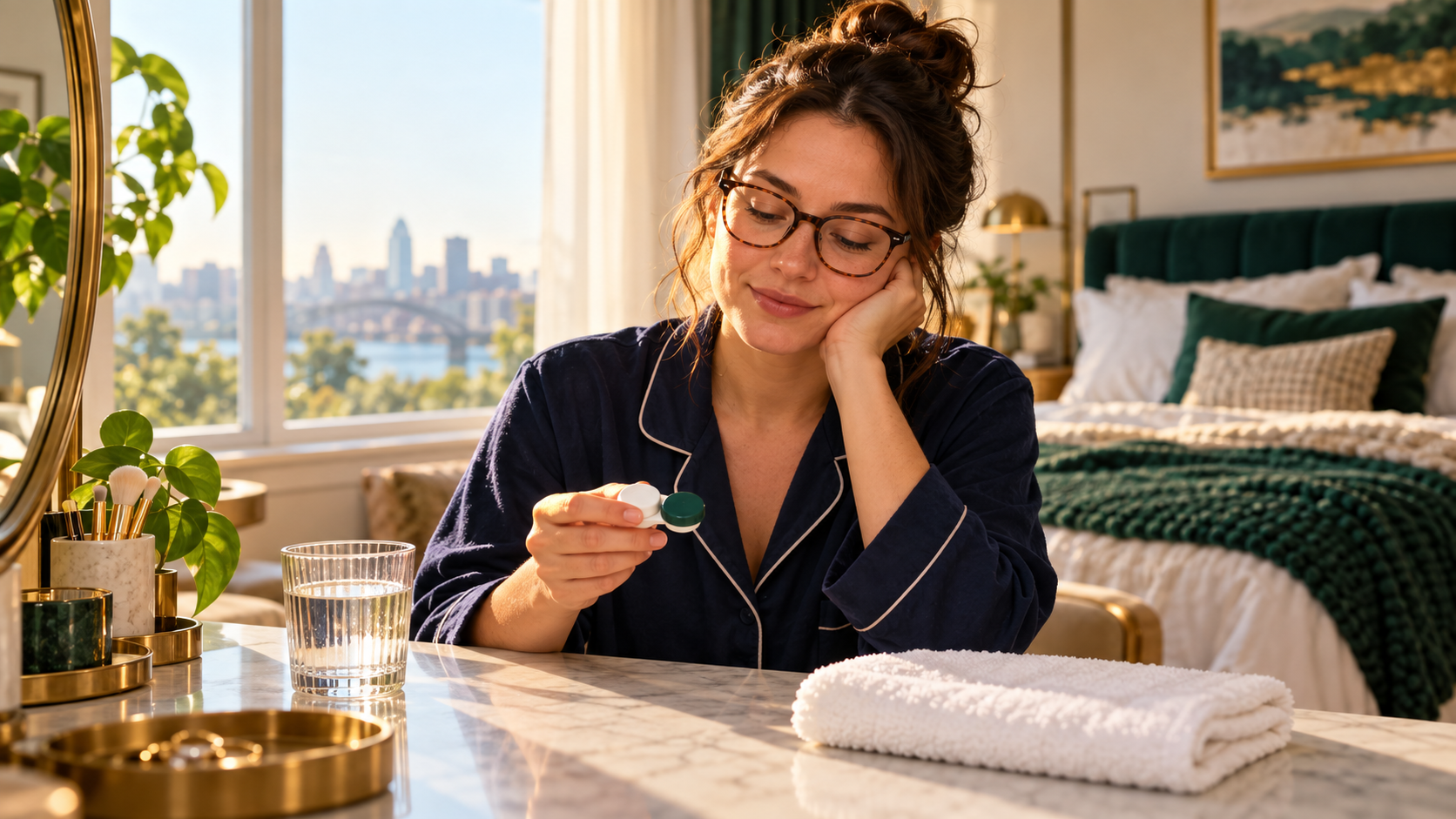
Slept in Your Contact Lenses? What to Do When You Wake Up
You fell asleep on the couch, woke up after a late shift or forgot to remove your contacts after an evening out. Now the lenses feel dry and your first thought is, “Did I damage my eyes?”
Do not panic. An accidental nap does not guarantee an infection. It does increase risk, and the safest response depends on how the eyes look and feel.
If you slept in contact lenses, remove them gently, switch to glasses and pay close attention to pain, redness, light sensitivity and vision.
Why Sleeping in Contacts Matters
Contact lenses change the environment at the corneal surface. Closed eyelids already reduce oxygen during sleep; a lens adds another barrier and can trap debris or microorganisms.
The CDC’s report on corneal infections associated with sleeping in contact lenses found that sleeping in lenses—whether occasionally, accidentally or as part of an extended-wear schedule—raises the risk of contact-lens-related infection six- to eightfold.
Extended-wear approval does not make overnight wear risk-free. It means a particular lens has labeling for that schedule and must still be specifically prescribed and monitored.
Step 1: Do Not Pull Off a Dry, Stuck Lens
Wash hands with soap and water and dry them completely. Blink several times. If the lens feels stuck, use a doctor-approved lubricating drop and allow the lens to move before attempting removal.
Do not use tap water, saliva, fingernails or tools. If the lens will not move comfortably, follow the safe steps in See Well’s stuck-contact-lens guide and seek professional help rather than scraping the eye.
Step 2: Discard the Lens or Clean It Correctly
A daily disposable lens should be discarded after removal. Do not reinsert it later.
For a reusable lens, use the prescribed disinfecting system and a clean case. Do not “top off” old solution. The CDC’s contact-lens prevention guidance stresses clean, dry hands, fresh solution and keeping lenses away from water.
If the eye is irritated, keep both lenses out even if only one eye feels abnormal.
Step 3: Wear Glasses and Reassess
Use current backup glasses. Mild dryness may improve after lens removal, blinking and approved lubrication. Do not use redness-relief drops to hide worsening symptoms, and do not borrow antibiotic or steroid drops.
The FDA’s contact-lens risk guidance advises patients to remove lenses and contact an eye-care professional when irritation, pain, redness or vision changes occur.
Call Promptly for These Warning Signs
Contact See Well or another eye-care professional promptly—often the same day—if you develop:
- increasing redness;
- eye pain or a persistent foreign-body sensation;
- light sensitivity;
- discharge;
- blurry or reduced vision;
- a white spot on the cornea;
- swelling; or
- symptoms that do not settle after lens removal.
These findings can occur with a corneal abrasion, inflammation or microbial keratitis. AAO guidance on contact-lens-related infection explains why pain, redness, light sensitivity and sudden blur should not be ignored.
Severe pain, rapidly worsening vision, major trauma or symptoms with a neurologic emergency require immediate emergency care.
When Can You Wear Contacts Again?
Do not put in a fresh pair merely because the first lens came out. Wait until the eyes feel and look normal and follow professional instructions when symptoms were present.
If an infection, abrasion or significant inflammation is diagnosed, the restart interval depends on healing—not the date on a calendar. The lens type, case and solution may need replacement.
See Well’s red and watery contact-lens guide explains why symptoms in a lens wearer deserve a lower threshold for evaluation.
Prevent the Next Overnight Mistake
- Keep glasses and a case near the bed.
- Set a nightly reminder.
- Remove lenses before alcohol, sedating medication or exhaustion makes handling harder.
- Carry glasses during travel and late events.
- Replace lenses on schedule.
- Never sleep in a daily disposable lens.
The CDC notes in its contact-lens surveillance report that sleeping in lenses is a recognized risk behavior even among experienced wearers.
A Contact-Lens Exam Is Preventive Care
An annual contact-lens examination confirms the exact prescribed product, vision, movement and corneal response. If lenses routinely feel dry enough that you fall asleep without noticing them, or removal is consistently difficult, the fit, material and routine deserve review.
Ordering the exact prescription through See Well keeps the product, authentic supply, fitting and follow-up connected. Eligible annual-supply rebates and shipping may be available; those conveniences never replace safe wear.
Explore Hyde Park & Nearby Neighborhoods
See Well Eyecare evaluates contact-lens concerns in Hyde Park (45208), convenient to Oakley (45209), Walnut Hills (45207) and Columbia-Tusculum. Bring the lens packaging or a clear photo of the label so Dr. Baik knows exactly what was worn.
Local Events & Attractions | Pop-Up Puppy Party on October 19
The official Cincinnati Parks calendar lists a Pop-Up Puppy Party on October 19. Late or busy days are when lens routines are easiest to forget—put backup glasses with your keys before heading out.
Frequently Asked Questions
Should I remove contacts immediately after waking?
Yes, but gently. If a lens is dry or stuck, lubricate and allow it to move rather than pulling forcefully.
Can I wear a new pair later the same day?
It is safer to stay in glasses until the eyes are comfortable and clear. If redness, pain, light sensitivity or blur occurred, obtain professional guidance before restarting.
Does extended-wear approval make sleeping safe?
No lens makes overnight wear risk-free. Extended wear must be specifically prescribed and still carries more infection risk than removing lenses before sleep.
Can I rinse a stuck lens with water?
No. Keep contact lenses away from tap, bottled and distilled water. Use an appropriate sterile product recommended for your lenses.
What if the lens is out but the eye still hurts?
Pain after removal can indicate abrasion, inflammation or infection. Stay in glasses and seek prompt evaluation.
Do Not Sleep on a Warning Sign
For pain, redness, light sensitivity or reduced vision after contact-lens sleep, review See Well’s emergency eye-care guidance and seek prompt care. For non-life-threatening needs, request an appointment; submission does not guarantee urgent availability.
About the Author
Dr. Rawzi Baik is the owner and optometrist at See Well Eyecare, an independent Hyde Park practice serving Cincinnati. He earned his Doctor of Optometry degree from The Ohio State University and provides comprehensive, medical, contact-lens and dry-eye care with clear explanations and individualized follow-up.
Primary keyword: slept in contact lenses what to do
Supporting keywords: slept in contacts Cincinnati, contact lens infection symptoms, red eye after contacts, contact lens emergency Hyde Park, corneal ulcer warning signs
Quick Links
Helpful Articles

All Eye Care Services
Eye care for every stage of life, from routine exams and contact lens fittings to dry eye care, myopia management and medical eye visits. Dr. Baik helps you understand your options and choose care that fits your needs.

Keep In Touch
For non-urgent questions or to learn more about our services, contact us today!

We are an LGBTQ+ friendly clinic that believes all people deserve quality eye care
- 3330 Erie Avenue, Suite 14
Cincinnati, OH 45208 - Phone: (513) 268-8748
- Fax: (513) 268-8758
- Monday 9:00am - 3:00pm
- Tuesday 8:00am - 7:00pm
- Wednesday Closed
- Thursday 8:00am - 5:00pm
- Friday 8:00am - 3:00pm
- Saturday 9:00am - 2:00pm
- Sunday Closed
- Monday
- Tuesday
- Wednesday
- Thursday
- Friday
- Saturday
- Sunday
- Monday
- Tuesday
- Wednesday
- Thursday
- Friday
- Saturday
- Sunday
© 2026 See Well Eyecare. All rights Reserved - Accessibility Statement - Privacy Policy - Terms & Conditions - Sitemap
Managed and Designed by 