
Can You Shower or Swim in Contact Lenses? Why Water Changes the Risk
Can You Shower or Swim in Contact Lenses? Why Water Changes the Risk
Contact lenses are designed to work with the tear film—not tap water, pool water, lake water, ocean water or a hot tub. Even clear, treated water is not sterile, and a soft lens can hold organisms against the cornea.
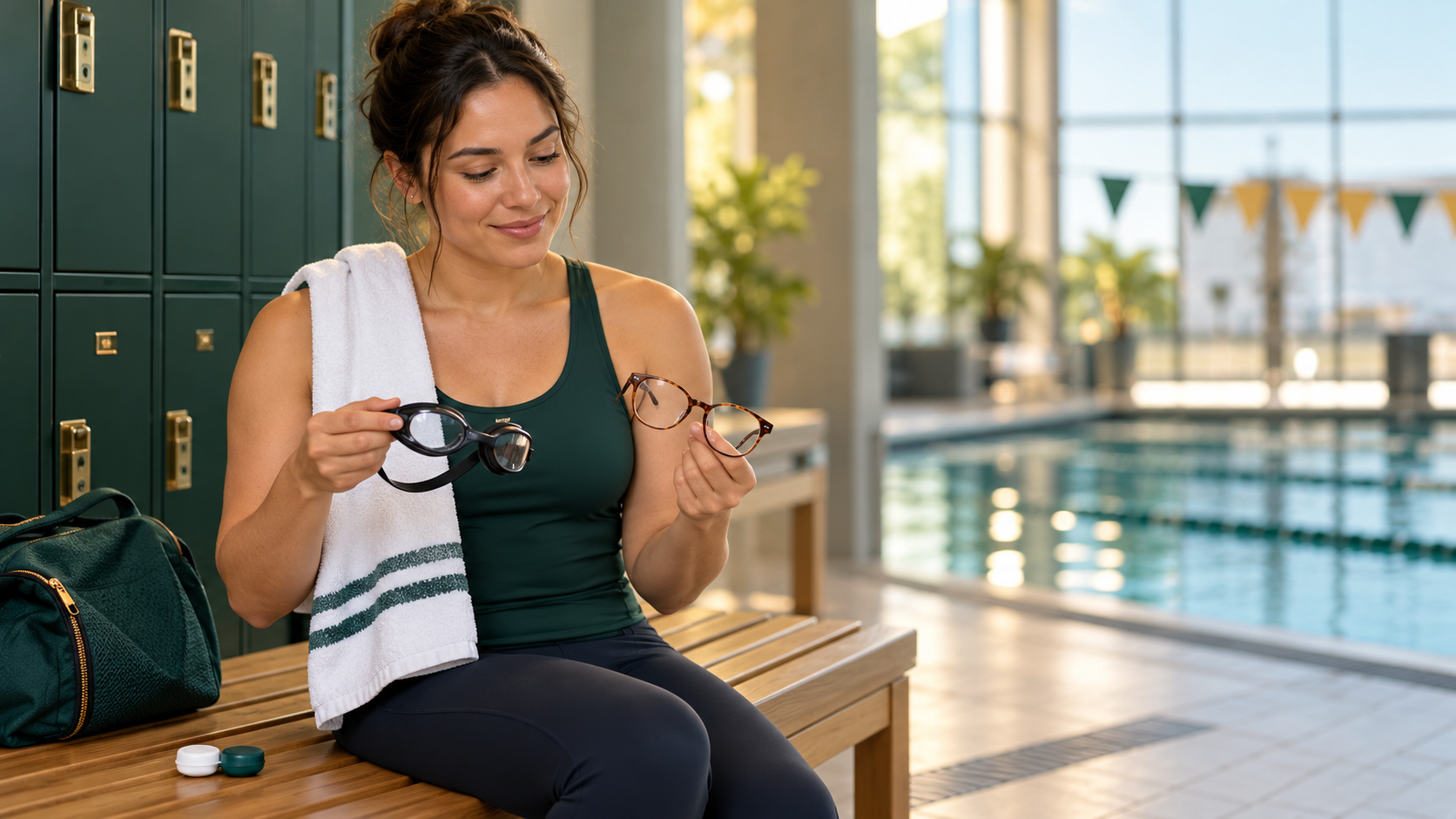
The practical rule is straightforward: remove contact lenses before showering, swimming or entering a hot tub. If you need clear vision in the water, properly fitted prescription swim goggles are a safer option.
Why Water and Contact Lenses Are a Risky Combination
The CDC advises keeping contact lenses away from all water. Water can cause a soft lens to swell, change shape or adhere more closely to the eye. That can create discomfort and may contribute to a small corneal surface injury that gives germs an easier path into the tissue.
Water also contains microorganisms. One of the most concerning is Acanthamoeba, a microscopic organism found in tap water, lakes, soil and other environments. CDC information on Acanthamoeba keratitis explains that the infection is rare but can be painful, difficult to treat and capable of causing permanent vision loss.
Chlorine does not make a swimming pool sterile, and bottled or distilled water is not an approved substitute for disinfecting solution. The FDA specifically advises patients not to expose contact lenses to tap, bottled, distilled, lake or ocean water.
What to Do if Water Touches Your Contact Lenses
Do not panic, but do not ignore the exposure.
- Wash your hands with soap and water and dry them completely.
- Remove the lenses as soon as it is safe and practical.
- If they are daily disposable lenses, discard them.
- If they are reusable lenses and your eyes feel completely normal, follow the prescribed cleaning process and disinfect them overnight before considering reuse. Do not rinse them with water.
- Put on backup glasses and monitor how your eyes feel and see.
This follows the CDC’s current guidance to remove a lens after water exposure and either throw it away or clean and disinfect it overnight. If a lens feels stuck, do not dig at the eye. Use preservative-free lubricating drops if appropriate and follow See Well’s guide to safely removing a stuck contact lens.
When Water Exposure Needs Prompt Eye Care
Remove the lens and contact an eye-care professional promptly if you develop:
- eye pain or increasing discomfort;
- unusual redness;
- light sensitivity;
- blurry or reduced vision;
- excessive tearing or discharge;
- a persistent gritty or foreign-body sensation; or
- difficulty opening the eye.
The FDA’s contact-lens safety guidance advises removing lenses and contacting an eye doctor for redness, pain, itching, tearing or vision changes. A contact-lens wearer cannot reliably determine at home whether symptoms represent mild irritation, a scratch or a developing corneal infection.
Do not put a fresh contact lens into a red or painful eye. Switch to glasses and review See Well’s guide to red or watery eyes during contact-lens wear. Symptoms that are severe, rapidly worsening or associated with meaningful vision loss may require emergency-department or ophthalmology evaluation.
Daily Disposable Lenses Simplify Care—but They Do Not Make Water Safe
Daily disposable contacts are worn once and discarded after removal. They eliminate the nightly cleaning and storage steps required for reusable lenses, which many busy professionals and families appreciate. They do not, however, make it safe to shower or swim in contacts.
If water reaches a daily lens, the cleanest next step is to remove and discard it. Never remove a one-day lens, store it and reinsert it later.
At a contact-lens examination and fitting, Dr. Rawzi Baik can review vision, lens movement, corneal health, tear-film quality, prescription range and daily routine. Depending on the individual eye and prescription, options may include ACUVUE OASYS 1-Day, DAILIES TOTAL1, MyDay daily disposable or Bausch + Lomb INFUSE One-Day. These are examples of prescribed medical devices, not interchangeable consumer products; the right lens must be evaluated on the eye.
When patients purchase their prescribed lenses through See Well, the product, prescription, fitting and follow-up remain connected. The team can also review current manufacturer rebates when available, qualifying annual-supply shipping and temporary trial lenses for purchasing patients when clinically appropriate and in stock. Before ordering elsewhere, ask what is included and how product or comfort concerns will be handled.
A Better Plan for Swimmers, Travelers and Busy Mornings
For swimming, use prescription goggles when clear underwater vision is important. The CDC specifically identifies prescription goggles as an option for people who need vision correction during water activities.
For showering, create a simple sequence: remove contacts, shower, wash and dry your hands again, then insert a fresh daily lens or properly disinfected reusable lens. Keep glasses where you can reach them safely.
For travel, pack more than the exact number of lenses you expect to wear. Include backup glasses, extra daily lenses or a clean case and travel-size prescribed solution for reusable lenses. The CDC’s contact-lens prevention guidance recommends carrying backup supplies and removing lenses before showering or swimming.
Explore Hyde Park & Nearby Neighborhoods
See Well Eyecare is located in Hyde Park (45208), close to Oakley (45209), Mount Lookout and Columbia-Tusculum. The practice provides contact-lens exams, medical eye care and urgent evaluation for patients throughout Cincinnati who need help with lens comfort, red eyes or safer daily-wear routines.
Local Events & Attractions: Plan Clear Vision Before the Pool
Cincinnati swimmers use neighborhood pools, fitness facilities and the Cincinnati Recreation Commission’s year-round Mt. Auburn Indoor Pool. Before swim lessons, lap swimming or winter travel, plan the vision correction you will use in and around the water. Prescription goggles and current backup glasses are more dependable than deciding at poolside to keep contacts in.
Frequently Asked Questions
Can I shower in contact lenses if I keep my eyes closed?
No method reliably keeps water away from the lenses during a shower. Remove them first.
Are waterproof swim goggles safe over contact lenses?
Goggles can leak, so wearing contacts underneath still creates avoidable risk. Prescription goggles provide clear vision without placing a lens on the cornea.
What if I accidentally swam in daily disposable contacts?
Wash and dry your hands, remove the lenses and discard them. Do not put new lenses into eyes that are red, painful, light-sensitive or blurry.
Can I rinse contacts with bottled or distilled water?
No. Use only the lens-care product prescribed for your lenses. Water is not a contact-lens disinfectant.
Does chlorine kill every organism that could affect my eyes?
No. A treated pool is not sterile, and contact lenses can trap water and organisms against the cornea.
When should I call an eye doctor after water exposure?
Seek prompt advice for pain, redness, light sensitivity, discharge, persistent foreign-body sensation or blurry vision. Severe or rapidly worsening symptoms need urgent evaluation.
Schedule a Contact-Lens and Corneal-Health Review
If contacts become uncomfortable around showers, swimming, exercise or long workdays, the solution may be a safer routine, a better-fitting lens, daily disposables or a reliable glasses and prescription-goggle plan. Request an appointment with See Well Eyecare in Hyde Park and bring your current contact-lens boxes, glasses and care products.
About the Author
Dr. Rawzi Baik is the owner and optometrist at See Well Eyecare, an independent practice in Hyde Park, Cincinnati. He provides comprehensive and medical eye care, contact-lens evaluations, dry-eye care, specialty contact-lens services and myopia management with an emphasis on careful examination, clear education and recommendations connected to each patient’s daily life.
Primary keyword: swimming or showering in contact lenses
Supporting keywords: water and contact lenses, contact lens infection Cincinnati, daily disposable contacts Hyde Park, prescription swim goggles, Oakley contact lens exam
Quick Links
Helpful Articles
All Eye Care Services
Eye care for every stage of life, from routine exams and contact lens fittings to dry eye care, myopia management and medical eye visits. Dr. Baik helps you understand your options and choose care that fits your needs.

Keep In Touch
For non-urgent questions or to learn more about our services, contact us today!

We are an LGBTQ+ friendly clinic that believes all people deserve quality eye care
- 3330 Erie Avenue, Suite 14
Cincinnati, OH 45208 - Phone: (513) 268-8748
- Fax: (513) 268-8758
- Monday 9:00am - 3:00pm
- Tuesday 8:00am - 7:00pm
- Wednesday Closed
- Thursday 8:00am - 5:00pm
- Friday 7:00am - 3:00pm
- Saturday 8:00am - 2:00pm
- Sunday Closed
- Monday
- Tuesday
- Wednesday
- Thursday
- Friday
- Saturday
- Sunday
- Monday
- Tuesday
- Wednesday
- Thursday
- Friday
- Saturday
- Sunday
© 2026 See Well Eyecare. All rights Reserved - Accessibility Statement - Privacy Policy - Terms & Conditions - Sitemap
Managed and Designed by 