
Why Are My Eyes Watering? Dry Eye, Allergies, Infection and Tear-Drainage Problems
Why Are My Eyes Watering? Dry Eye, Allergies, Infection and Tear-Drainage Problems
Eyes can water in cold air, wind or around chopped onions. But frequent tearing, tears running down the cheek or watering paired with blur, redness or irritation deserves a closer look.
The surprising part is that watery eyes may actually be dry. When the tear film evaporates too quickly or the eye surface becomes irritated, the lacrimal glands can release a burst of watery “reflex” tears. Those tears may spill over without restoring the stable oil-water-mucin balance needed for lasting comfort and clear vision.
For patients searching for the cause of watery eyes in Cincinnati, the pattern matters: itching suggests something different from pain; thick discharge differs from clear tearing; and one constantly overflowing eye may point toward a drainage or eyelid issue.
Dry Eye Can Make the Eyes Water More
Healthy tears contain oil, water and mucus. The National Eye Institute explains how tears are produced and drained, while its dry-eye guide explains that tears may be insufficient or may not work correctly.
When the oil-producing meibomian glands are blocked or weak, tears evaporate faster. The eye surface becomes irritated and reflex tearing follows. Clues include:
- burning, stinging or grittiness;
- watering during screen use, wind or air conditioning;
- vision that clears after blinking;
- symptoms that worsen later in the day; and
- crusting or inflammation along the lashes.
The AOA lists excess watering among dry-eye symptoms. A dry-eye evaluation at See Well can examine the tear film, corneal surface, eyelid margins, blink and meibomian glands before a treatment is chosen.
Itching Often Points Toward Allergy
Clear, watery eyes with prominent itching—often affecting both eyes—commonly occur with allergic conjunctivitis. Seasonal pollen, pets, dust mites and other triggers can contribute. The American Optometric Association’s ocular-allergy guide notes that dry eye and blepharitis can produce similar symptoms, which is one reason self-diagnosis is unreliable.
Avoid rubbing. Rubbing can worsen inflammation and may create more irritation. A cool compress may soothe some patients, but eye drops should be selected thoughtfully. Redness-relief drops, lubricants and antihistamine drops are not interchangeable, and some preserved products can irritate the ocular surface when used too often.
If See Well recommends a particular drop, lid product or supplement, purchasing it through the practice keeps the selection and instructions connected to the examination. The recommendation is based on findings—not a promise that one product works for everyone.
Infection May Cause Tearing and Discharge
Viral and bacterial conjunctivitis can produce redness, watering and discharge. The CDC explains that viral and bacterial pink eye can spread easily, and its symptom guide notes that discharge may be watery, clear, yellow, white or green depending on the cause.
Helpful clues include a recent respiratory illness, exposure to someone with pink eye, eyelids stuck together in the morning, increasing redness or symptoms spreading from one eye to the other. Not every red or watery eye needs an antibiotic; viral, bacterial, allergic and inflammatory problems are treated differently.
Wash hands, avoid sharing towels or cosmetics and do not place another person’s prescription drop in your eye. If you wear contact lenses, remove them and contact an eye-care professional. Our separate guide explains what to do with a red or watery eye during contact-lens wear.
A Blocked Drain or Eyelid Problem Can Make Tears Overflow
Tears normally drain through small openings near the inner eyelids and then into the nose. Narrowing or blockage can cause persistent overflow, sometimes mainly on one side. Eyelid looseness, eyelid turning, scar tissue, inflammation and other anatomical changes may also keep tears from entering the drainage system correctly.
The American Academy of Ophthalmology’s overview of tear-drainage obstruction describes excess tearing as a common symptom. Recurrent swelling, tenderness or discharge near the inner corner of the eye needs medical evaluation because the tear sac can become infected.
An optometrist can examine the eyelids, puncta, tear level and ocular surface, then determine whether treatment, observation or referral to an ophthalmologist is appropriate.
Wind, Cold Air and Bright Light Can Trigger Reflex Tearing
Outdoor air can rapidly evaporate tears. Bright light may also trigger tearing in sensitive eyes. Wraparound sunglasses or an appropriately contoured frame can reduce wind exposure and improve visual comfort.
If prescription sunwear is recommended, See Well’s optical team can match frame fit, prescription accuracy, lens material, polarization and tint to driving, walking or other outdoor use. Optikam measurements help connect the chosen frame with the way the prescription lenses will sit in front of the eyes.
When Watery Eyes Need Prompt Attention
Contact an eye-care professional promptly for watering accompanied by:
- moderate or severe eye pain;
- light sensitivity;
- reduced or distorted vision;
- significant redness or swelling;
- an eye injury or possible foreign body;
- contact-lens wear and a painful red eye;
- thick discharge with worsening symptoms; or
- tenderness or swelling beside the nose at the inner eye corner.
Severe vision loss, chemical exposure, major trauma or vision change with neurologic symptoms may require emergency-department care. Review See Well’s emergency eye-care guidance rather than waiting for a routine visit.
What an Examination May Include
Dr. Baik may assess:
- visual acuity and prescription;
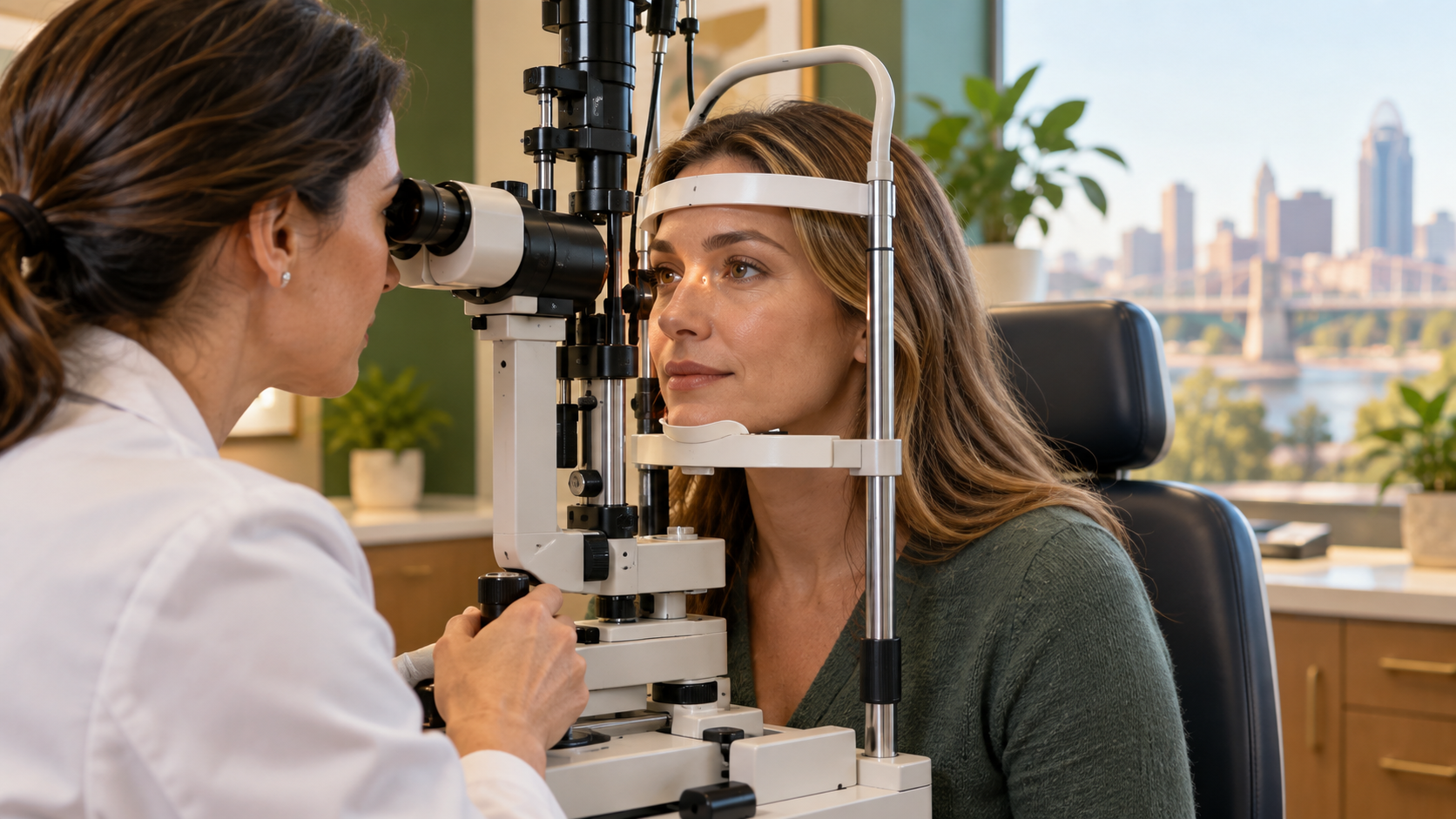
- the cornea, conjunctiva and eyelids under magnification;
- tear-film stability and staining;
- meibomian-gland function;
- the tear openings and eyelid position;
- contact-lens fit when relevant; and
- signs of infection, allergy, inflammation or a foreign body.
Treatment might involve lubrication, allergy management, eyelid care, prescription medication, dry-eye treatment, contact-lens changes or referral for a drainage problem. The diagnosis comes first.
Explore Hyde Park & Nearby Neighborhoods
See Well Eyecare welcomes patients from Hyde Park (45208), Oakley (45209), Mariemont (45227) and Mount Lookout. Our Erie Avenue office provides comprehensive and medical eye care, contact-lens services, dry-eye evaluation and professionally fitted eyewear.
Local Events & Attractions | Fall Air and Sensitive Eyes
Fall walks at Ault Park, along Wasson Way or at the Cincinnati Nature Center can expose the eyes to wind, pollen and changing humidity. Sunglasses may reduce wind and light exposure, but persistent tearing still deserves an examination instead of indefinite self-treatment.
Frequently Asked Questions
How can my eyes be dry if they keep watering?
An unstable or rapidly evaporating tear film can irritate the eye and trigger a flood of reflex tears. Those watery tears may spill over without providing durable lubrication.
Does itching mean my watery eyes are allergies?
Itching is a strong allergy clue, especially when both eyes are affected, but dry eye, blepharitis and contact-lens irritation can overlap. An examination can separate them.
How do I know if watery eyes are pink eye?
Redness, discharge, recent respiratory illness and exposure history may suggest conjunctivitis. Because viral, bacterial and allergic forms differ, avoid using leftover antibiotic drops without an examination.
Why does only one eye water constantly?
One-sided overflow may come from localized irritation, eyelid position or a narrowed tear-drainage pathway. Persistent unilateral tearing should be evaluated.
Can I keep wearing contacts when my eye waters?
Remove the lenses if watering is new, especially with redness, pain, light sensitivity, discharge or blur. Contact-lens-related corneal problems can progress quickly.
Where can I schedule a watery-eye evaluation in Cincinnati?
Use See Well’s appointment-request form. State whether symptoms affect one or both eyes and whether there is itching, pain, discharge, contact-lens use or reduced vision.
About the Author
Dr. Rawzi Baik is the owner and optometrist at See Well Eyecare in Hyde Park, Cincinnati. A graduate of The Ohio State University College of Optometry, he provides comprehensive and medical eye care with a focus on identifying the cause of symptoms before recommending treatment.
Treat the Cause, Not Just the Overflow
If your eyes water often, bring the pattern to an examination. Once the cause is clear, treatment can target the tear film, allergy, infection, eyelid or drainage system instead of simply trying another bottle from the eye-drop aisle.
Primary keyword: watery eyes Cincinnati Supporting keywords: eyes watering from dry eye, allergy watery eyes, blocked tear duct adult, pink eye discharge, excessive tearing treatment, Hyde Park eye doctor
Quick Links
Helpful Articles

All Eye Care Services
Eye care for every stage of life, from routine exams and contact lens fittings to dry eye care, myopia management and medical eye visits. Dr. Baik helps you understand your options and choose care that fits your needs.

Keep In Touch
For non-urgent questions or to learn more about our services, contact us today!

We are an LGBTQ+ friendly clinic that believes all people deserve quality eye care
- 3330 Erie Avenue, Suite 14
Cincinnati, OH 45208 - Phone: (513) 268-8748
- Fax: (513) 268-8758
- Monday 9:00am - 3:00pm
- Tuesday 8:00am - 7:00pm
- Wednesday Closed
- Thursday 8:00am - 5:00pm
- Friday 8:00am - 3:00pm
- Saturday 9:00am - 2:00pm
- Sunday Closed
- Monday
- Tuesday
- Wednesday
- Thursday
- Friday
- Saturday
- Sunday
- Monday
- Tuesday
- Wednesday
- Thursday
- Friday
- Saturday
- Sunday
© 2026 See Well Eyecare. All rights Reserved - Accessibility Statement - Privacy Policy - Terms & Conditions - Sitemap
Managed and Designed by 