
Chemical in Your Eye? What to Do Immediately—and When It’s an Emergency in Cincinnati
Chemical in Your Eye? What to Do Immediately—and When It’s an Emergency in Cincinnati
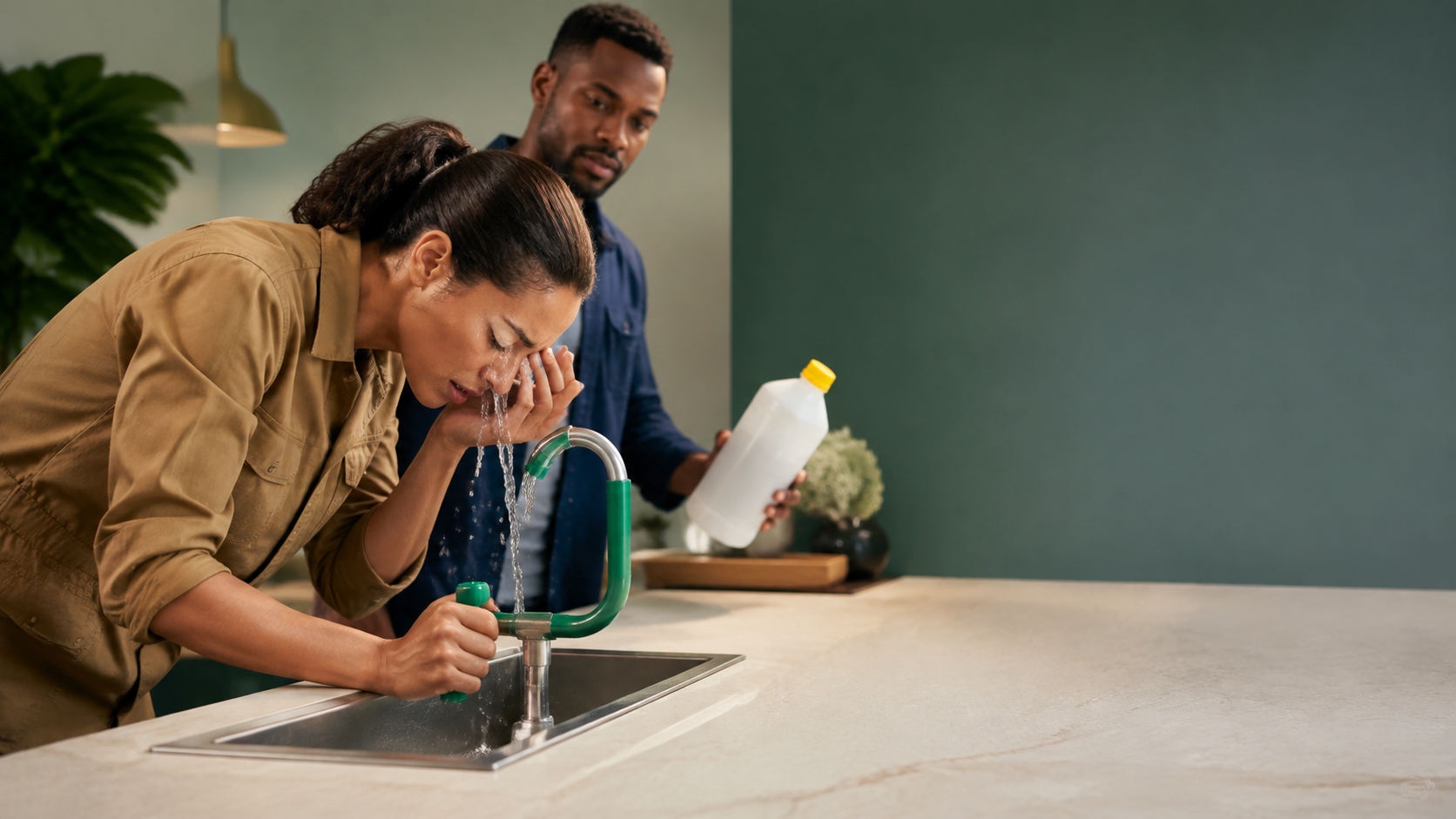
A splash of drain cleaner, detergent, disinfectant, fertilizer, hair product, laboratory solution or another chemical can injure the eye within seconds. The most important first step is simple: begin rinsing immediately. Do not wait to call an office, search for a special eyewash or identify every ingredient before water reaches the eye.
If this is happening now, start irrigation with clean running water, sterile saline or an appropriate eyewash. Then obtain professional guidance. Severe pain, reduced vision, a cloudy-looking cornea, marked redness, trouble opening the eye, an alkali exposure, or any significant workplace or industrial exposure warrants emergency evaluation after irrigation has begun.
See Well Eyecare provides urgent eye care in Cincinnati, but chemical exposures can require an emergency department or ophthalmology service. Call the office only after rinsing has started so our team can help direct you to the safest level of care.
First: Start Rinsing the Eye
Poison Control’s eye-exposure guidance recommends immediate irrigation with plenty of room-temperature water for at least 15 to 20 minutes. Clinical management may require much longer irrigation, depending on the substance and the eye’s pH.
Use the fastest safe source available:
clean running tap water;
a shower with a gentle stream;
sterile saline; or
a properly maintained eyewash station.
Hold the eyelids open as well as you can, blink repeatedly and let the liquid flow across the eye. If only one eye is affected, angle your head so runoff moves away from the uninjured eye and other people. Remove contaminated clothing when safe and avoid spreading chemical residue with your hands.
If contact lenses come out easily during irrigation, remove them. Do not pause rinsing or struggle with a lens. America’s Poison Centers likewise advises removing lenses when possible and rinsing with lukewarm running water.
Do Not Try to Neutralize the Chemical
Never put vinegar, baking soda, another chemical, eye drops or a homemade mixture into the eye to “cancel out” the exposure. Mixing an acid and an alkali can create heat and worsen tissue damage. The American Academy of Ophthalmology’s chemical-injury guidance emphasizes immediate irrigation with a nontoxic liquid—even tap water if that is what is available.
Do not rub the eye, patch it tightly or use leftover prescription medication. The goal at home is dilution and removal, not diagnosis or chemical neutralization.
Bring the Product Information—Without Delaying Care
When it is safe, bring the product container, label, a clear photo of the label or the Safety Data Sheet. This can help the clinician or Poison Control identify the chemical, concentration and relevant hazards. OSHA explains how Safety Data Sheets communicate chemical hazards and first-aid information.
Do not re-enter a dangerous space or handle a leaking container to retrieve it. A photo taken from a safe distance may be enough. Irrigation and personal safety come first.
Why an Eye-Care Professional Checks pH
After immediate irrigation, a clinician may test the ocular-surface pH, continue irrigation and recheck it after a short pause. Current ophthalmic guidance identifies an appropriate physiologic range of approximately 7.0 to 7.4; retained particles under the eyelids can cause the pH to drift again. The American Academy of Ophthalmology's current pre-ophthalmologist trauma guidance describes that range. The examination may also assess vision, the cornea and conjunctiva, the limbus, the eyelids, eye pressure when safe, and whether particles remain trapped in the fornices.
This is why a quick home rinse does not necessarily complete the treatment. The amount, concentration, exposure time and type of chemical all matter. Alkali products can penetrate ocular tissues rapidly, but acids, solvents, detergents and aerosols may also cause meaningful injury.
When to Call 911, Go to the Emergency Department or Contact Poison Control
Call 911 for collapse, breathing difficulty, seizure, major facial injury, severe chemical exposure affecting more than the eye, or when emergency transport is needed. Go to the emergency department promptly after starting irrigation for major vision loss, severe pain, a cloudy or white-looking eye, an abnormal pupil, significant industrial exposure, or suspected penetrating trauma.
For exposure-specific advice, use Poison Control’s online tool or contact Poison Control. Do not let that conversation delay rinsing.
For less severe exposures, See Well Eyecare may be able to provide a same-day medical eye examination. Our team will help determine whether office evaluation is appropriate or whether you should proceed directly to emergency care. Our eye-emergency guide explains additional warning signs. If there was no chemical exposure and the problem began during contact-lens wear, review our separate guide to red or watery eyes with contact lenses.
Could an Amniotic Membrane Be Used?
After an examination, a therapeutic amniotic membrane may be considered for selected ocular-surface injuries to support healing and protect damaged tissue. It is not a home remedy, not appropriate for every chemical exposure and never a substitute for immediate irrigation.
See Well Eyecare has an in-office amniotic-membrane capability when Dr. Baik determines it is clinically appropriate. Severe burns may require hospital-based or corneal-specialist care. A Cochrane review of amniotic membrane for acute ocular burns found uncertainty in the evidence and differences by burn severity, reinforcing why treatment must be individualized rather than promised in advance.
Preventing the Next Exposure
Read product labels before opening chemicals, keep containers away from children, ventilate work areas and wear task-appropriate splash goggles. Regular glasses are not sealed chemical protection. OSHA requires suitable eyewash access where corrosive materials are used and provides workplace requirements for medical services and first aid.
Frequently Asked Questions
Should I look for saline before rinsing?
No. If clean running water is immediately available, use it. Do not lose time searching for a special solution.
How long should I rinse a chemical from my eye?
Begin immediately and rinse for at least 15 to 20 minutes while obtaining expert direction. Some exposures require longer irrigation until an eye-care team confirms that ocular-surface pH is stable.
Should I remove my contact lens?
Remove it during irrigation if it comes out easily. Do not delay irrigation or struggle with the lens.
Can I neutralize an acid with a base, or a base with an acid?
No. Never attempt chemical neutralization in the eye. Use copious clean water, saline or eyewash.
What should I bring to the examination?
Bring the container, label, photo or Safety Data Sheet when it is safe to do so. Do not risk another exposure to retrieve it.
Can See Well Eyecare treat every chemical injury?
No office can safely promise that before triage. We evaluate many urgent eye concerns, but severe burns, major trauma or systemic exposures may need an emergency department and ophthalmology care.
Get the Right Level of Care Now
If a chemical is in the eye, rinse first. After irrigation has started, contact See Well Eyecare for direction or proceed to emergency care based on the warning signs above. For non-life-threatening urgent concerns, request an appointment and clearly state that a chemical exposure occurred.
About the Author
Dr. Rawzi Baik is an Ohio State University College of Optometry graduate and the owner of See Well Eyecare, an independent practice in Hyde Park, Cincinnati. He provides comprehensive and medical eye care with an emphasis on careful examination, clear patient education and timely referral when hospital or specialist care is needed.
Explore Hyde Park & Nearby Neighborhoods
See Well Eyecare is convenient to Hyde Park (45208), Oakley (45209) and Walnut Hills (45207). Our Erie Avenue location offers free parking behind the building, which can make an urgent office evaluation easier when office care is clinically appropriate.
Local Events & Attractions
Keep a simple eye-safety kit ready before household projects, fall yard work or a visit to the shops around Hyde Park Square. Families can review the National Eye Institute’s protective-eyewear guidance before sports, science projects and activities involving flying debris or chemicals.
Primary keyword: chemical in eye emergency Cincinnati
Supporting keywords: chemical eye burn first aid, rinse chemical from eye, Poison Control eye exposure, urgent eye care Cincinnati, ocular chemical injury
Quick Links
Helpful Articles
All Eye Care Services
Find personalized eye care excellence with our comprehensive services. From eye exams to advanced diagnostics, trust us for all your vision needs.

Keep In Touch
For non-urgent questions or to learn more about our services, contact us today!

We are an LGBTQ+ friendly clinic that believes all people deserve quality eye care
- 3330 Erie Avenue, Suite 14
Cincinnati, OH 45208 - Phone: (513) 268-8748
- Fax: (513) 268-8758
- Monday 9:00am - 3:00pm
- Tuesday 11:00am - 7:00pm
- Wednesday Closed
- Thursday 9:00am - 4:00pm
- Friday 8:00am - 5:00pm
- Saturday 9:00am - 3:00pm
- Sunday Closed
- Monday
- Tuesday
- Wednesday
- Thursday
- Friday
- Saturday
- Sunday
- Monday
- Tuesday
- Wednesday
- Thursday
- Friday
- Saturday
- Sunday
© 2026 See Well Eyecare. All rights Reserved - Accessibility Statement - Privacy Policy - Sitemap
Managed and Designed by 