
Pregnancy, Vision Changes and Contact Lenses: What Cincinnati Patients Should Know
Pregnancy, Vision Changes and Contact Lenses: What Cincinnati Patients Should Know
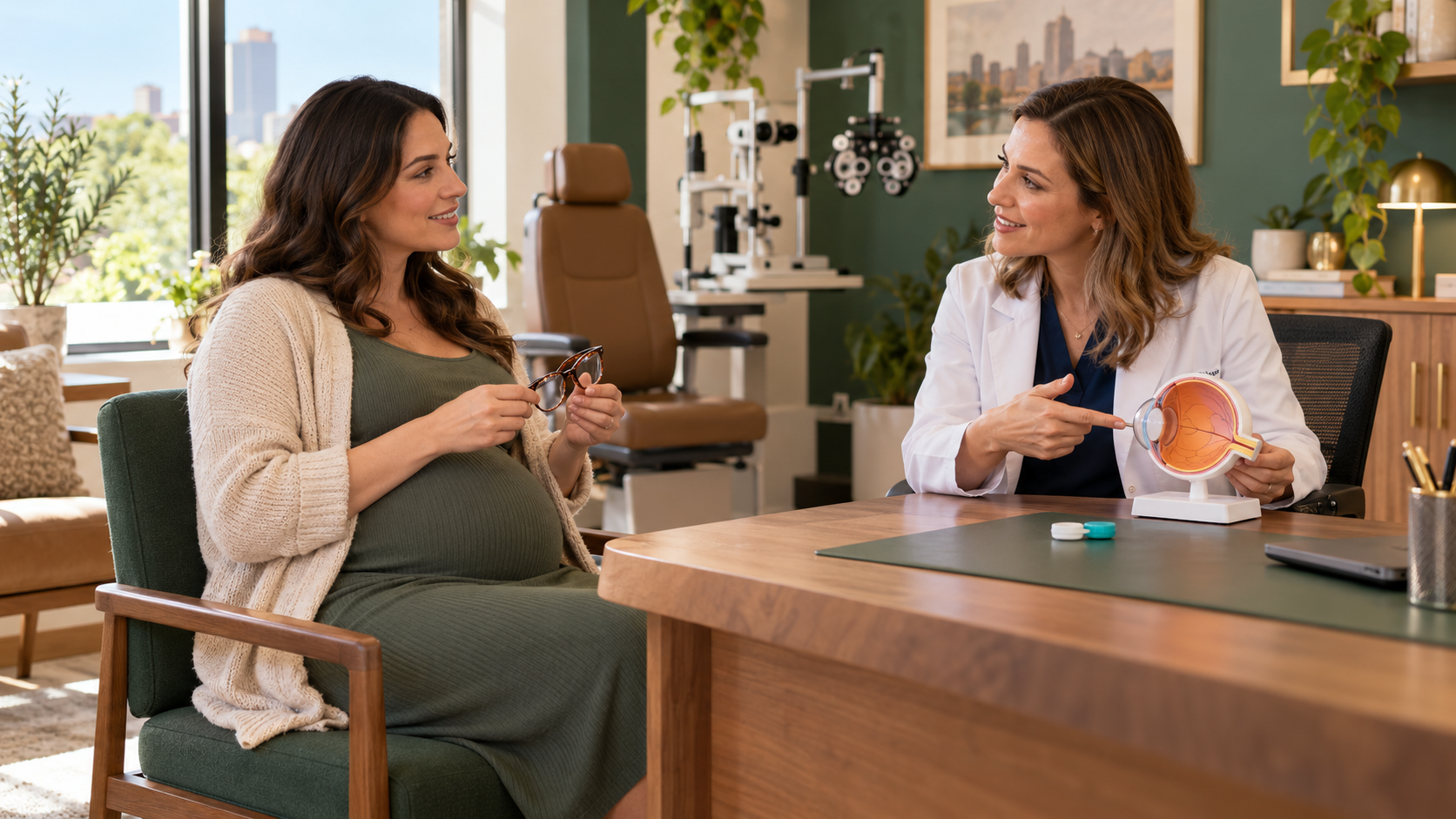
Pregnancy changes much more than a glasses prescription. Hormonal shifts, fluid balance, blood pressure, blood sugar and the tear film can all affect how the eyes feel or how clearly someone sees.
Many changes are mild and temporary. Others—especially sudden blur, spots, flashes, double vision or vision loss—can be warning signs that require prompt contact with an obstetric clinician or emergency evaluation.
An eye examination can help assess the eyes, but it should not delay urgent pregnancy care when warning signs appear.
Common Eye and Vision Changes During Pregnancy
The American Academy of Ophthalmology’s pregnancy guidance notes that the eyes can change during pregnancy and that very blurry vision warrants prompt medical attention. Possible non-emergency changes include:
- fluctuating or mildly blurred vision;
- dry, gritty or burning eyes;
- reduced contact-lens comfort;
- increased sensitivity to an existing prescription; and
- a temporary change in how glasses or contacts seem to work.
A peer-reviewed review of pregnancy and the eye describes changes in corneal thickness, curvature, tear function and contact-lens tolerance. Most physiologic changes improve after pregnancy, but the timing varies.
Because a small prescription change may reverse, a major permanent eyewear change is not always the first step. The decision depends on how much the vision has changed, how long it has been present and whether the patient can function safely.
Why Contact Lenses May Feel Different
Pregnancy-related tear-film and corneal changes can make a familiar contact lens feel dry, tight or less clear. A lens that was previously comfortable may become harder to wear for a full day.
Do not compensate by wearing the lens longer, sleeping in it or using an unapproved drop. Instead:
- shorten wear time if comfort declines;
- keep current backup glasses available;
- use only drops specifically appropriate for contact lenses and cleared by the treating clinicians;
- stop lens wear if the eye becomes red, painful, light-sensitive or suddenly blurry; and
- schedule a contact-lens evaluation in Cincinnati if the problem persists.
The AOA’s pregnancy contact-lens guidance discusses how pregnancy and hormonal changes may affect contact-lens success. An examination can assess fit, movement, tear film and corneal health rather than assuming the lens material alone is the problem.
If burning, grittiness or fluctuating clarity continues even when contacts are out, a dry-eye evaluation at See Well Eyecare can help distinguish tear-film problems from a prescription or lens-fit change. Treatment recommendations should be coordinated with the obstetric clinician when pregnancy affects medication or product choices.
Vision Changes That Need Prompt Obstetric Attention
The American College of Obstetricians and Gynecologists lists changes in eyesight or seeing spots among possible symptoms of preeclampsia, especially when accompanied by a severe headache, swelling of the face or hands, upper-abdominal pain, nausea later in pregnancy or difficulty breathing.
The CDC’s urgent maternal warning-sign guidance also includes vision changes during pregnancy and the postpartum period.
Call the obstetric team right away for sudden or significant vision changes. Seek emergency care when symptoms are severe, rapidly worsening or accompanied by neurologic symptoms, major vision loss, fainting, chest pain, severe shortness of breath or other emergency warning signs. Do not wait for a routine eye appointment response.
Diabetes and Pregnancy Require Extra Coordination
Diabetes can affect the retina, and pregnancy may change monitoring needs for someone with pre-existing diabetes or diabetic retinopathy. The American Diabetes Association advises an eye examination when planning pregnancy, and the National Eye Institute’s diabetic-retinopathy guidance explains that people with any type of diabetes can develop diabetic eye disease.
Patients with type 1 or type 2 diabetes should coordinate eye care with the clinician managing their pregnancy and diabetes. Gestational diabetes should also be discussed with the obstetric team; an individualized plan matters more than a generic schedule from a blog.
At See Well, a medical eye examination can document retinal and ocular findings and, with permission, communicate relevant results to the other clinicians involved in care.
Should You Change Your Glasses Prescription?
Sometimes a temporary adjustment or dependable backup pair improves function. In other cases, waiting until vision stabilizes after delivery makes more sense. Factors include:
- how large and consistent the change is;
- driving and work demands;
- whether the current glasses remain safe and usable;
- corneal and tear-film findings; and
- the likelihood that the change is temporary.
If new glasses are appropriate, See Well’s optical team can review the complete value of the pair—prescription accuracy, professional measurements, frame fit, lens design and follow-up adjustments—rather than treating the prescription as the only variable. Before ordering elsewhere, ask what measurements, troubleshooting and warranty support are included.
Explore Hyde Park & Nearby Neighborhoods
See Well Eyecare is located in Hyde Park (45208), convenient to Oakley (45209), Mount Lookout and Columbia-Tusculum. We welcome pregnant and postpartum patients from Mariemont and across Cincinnati for comprehensive, medical and contact-lens care while coordinating appropriately with their obstetric and primary-care teams.
Local Events & Attractions: Plan Comfortable Cincinnati Outings
For a gentle indoor outing, the Cincinnati Art Museum and Cincinnati Museum Center provide places to rest and adjust the length of a visit. The Krohn Conservatory offers a warm local destination, although humid environments may affect comfort differently for different contact-lens wearers. Carry glasses, prescribed drops and water, and do not push through a red or painful eye.
Frequently Asked Questions
Is blurry vision normal during pregnancy?
Mild temporary change can occur, but new blur should be discussed with your clinicians. Sudden, significant or worsening blur—especially with headache, swelling, seeing spots or other warning signs—requires prompt obstetric guidance.
Can pregnancy make contact lenses uncomfortable?
Yes. Tear-film and corneal changes may reduce comfort or alter vision. Shorter wear time, appropriate lubrication and backup glasses may help, but persistent symptoms deserve evaluation.
Should I order a new year’s supply of contacts while my vision is changing?
Not automatically. A contact-lens examination should confirm that the prescription, fit and product remain appropriate before a large order.
Can I use any dry-eye drop while pregnant?
No. Ask the eye doctor and obstetric clinician whether a specific product is appropriate. “Natural” or over-the-counter does not automatically mean suitable for every pregnancy.
Should I wait until after delivery for new glasses?
Not always. If the change interferes with safe driving, work or daily function, an updated or temporary solution may be reasonable. Dr. Baik can explain the tradeoffs after an examination.
Can See Well diagnose preeclampsia?
No. Preeclampsia is an obstetric condition. An eye examination may identify ocular findings or help evaluate vision, but warning symptoms require immediate contact with the obstetric team or emergency care.
For practical questions about scheduling, insurance, examinations and contact lenses, review See Well’s patient eye-care FAQs.
Get the Right Care at the Right Time
For gradual blur, dry eye or contact-lens discomfort, request an eye examination with See Well Eyecare. For sudden vision changes or symptoms suggestive of a pregnancy emergency, contact the obstetric team immediately and seek emergency care when directed.
About the Author
See Well Eyecare is an independent Hyde Park optometry practice led by Rawzi Baik, OD. We provide comprehensive and medical eye care, contact-lens evaluations, dry-eye care and personalized optical guidance, with referral and care coordination when a patient’s symptoms require another medical specialty.
This article is general education. It does not replace obstetric care, emergency evaluation or an individual eye examination.
Primary keyword: vision changes during pregnancy
Supporting keywords: pregnancy blurry vision, contact lenses during pregnancy, dry eyes pregnancy, Cincinnati eye doctor, Hyde Park optometrist
Quick Links
Helpful Articles
All Eye Care Services
Eye care for every stage of life, from routine exams and contact lens fittings to dry eye care, myopia management and medical eye visits. Dr. Baik helps you understand your options and choose care that fits your needs.

Keep In Touch
For non-urgent questions or to learn more about our services, contact us today!

We are an LGBTQ+ friendly clinic that believes all people deserve quality eye care
- 3330 Erie Avenue, Suite 14
Cincinnati, OH 45208 - Phone: (513) 268-8748
- Fax: (513) 268-8758
- Monday 9:00am - 3:00pm
- Tuesday 8:00am - 7:00pm
- Wednesday Closed
- Thursday 8:00am - 5:00pm
- Friday 7:00am - 3:00pm
- Saturday 8:00am - 2:00pm
- Sunday Closed
- Monday
- Tuesday
- Wednesday
- Thursday
- Friday
- Saturday
- Sunday
- Monday
- Tuesday
- Wednesday
- Thursday
- Friday
- Saturday
- Sunday
© 2026 See Well Eyecare. All rights Reserved - Accessibility Statement - Privacy Policy - Terms & Conditions - Sitemap
Managed and Designed by 