
Why Tears Matter: What the Tear Film Does—and Why Dry Eye Can Blur Vision
Why Tears Matter: What the Tear Film Does—and Why Dry Eye Can Blur Vision
Tears do much more than appear when you cry. Every blink spreads a microscopically thin tear film across the cornea. That film keeps the eye comfortable, helps wash away small particles and creates the smooth optical surface needed for clear vision.
The National Eye Institute explains how tears work: when the eyes do not make enough tears—or the tears do not work correctly—dry eye can develop. That is why dry eye may feel gritty but can also cause blur that improves for a moment after blinking.
Tears Are a Coordinated System, Not Just Water
The tear film contains water, oil, mucins, proteins, electrolytes and other components. Older diagrams often show three perfectly separate layers, but current science describes a more interactive structure. The detailed TFOS DEWS II Tear Film Report reviews how these components work together on the ocular surface.
In patient-friendly terms:
- Watery components provide moisture and carry protective substances.
- Oils from the meibomian glands help slow evaporation and support tear-film stability.
- Mucins help tears spread across and adhere to the ocular surface.
- Blinking redistributes the film and helps clear debris.
The AAO’s explanation of the meibomian glands notes that these eyelid glands supply the outer oily portion of the tear film. When their oil becomes thick or the openings become obstructed, tears may evaporate too quickly.
Why Dry Eye Can Make Vision Come and Go
The cornea is one of the eye’s most powerful focusing surfaces. If the tear film breaks up between blinks, that surface becomes optically irregular. Words may look smeared, lights may scatter and vision may sharpen briefly after a blink.
This does not mean every episode of fluctuating vision is dry eye. Blood-sugar changes, contact-lens problems, medication effects and other eye conditions can also cause variable blur. See Well’s guide to vision that becomes blurry and then clears explains why the timing, triggers and examination findings matter.
Dry Eye Can Also Make the Eyes Water
It seems contradictory, but an irritated surface can trigger reflex tearing. Those emergency tears may overflow without staying stable long enough to solve the underlying problem. Patients can therefore have watery eyes and dry-eye disease at the same time.
See Well’s article on watery eyes and their possible causes discusses dry eye, allergy, infection and tear-drainage problems. Clear tearing with burning is different from thick discharge, significant pain or sudden vision loss.
Dry Eye Is a Loss of Balance
The international TFOS DEWS II definition describes dry eye as a multifactorial ocular-surface disease involving loss of tear-film homeostasis. “Multifactorial” matters: two patients with the same burning sensation may have different contributing problems.
Possible contributors include:
- meibomian-gland dysfunction and rapid evaporation;
- reduced tear production;
- incomplete or infrequent blinking;
- eyelid inflammation;
- contact-lens wear;
- medications and hormonal changes;
- autoimmune disease;
- allergy or environmental exposure; and
- nerve-related changes in ocular sensation.
The AAO dry-eye overview and the NEI dry-eye resource both emphasize that dry eye may involve too few tears, poor-quality tears or tears that do not remain on the eye appropriately.
What a Dry-Eye Evaluation Looks For
An effective evaluation begins with a history: when symptoms occur, what worsens them, which drops have been tried, how long screens are used, whether contact lenses are worn and which medications or health conditions may matter.
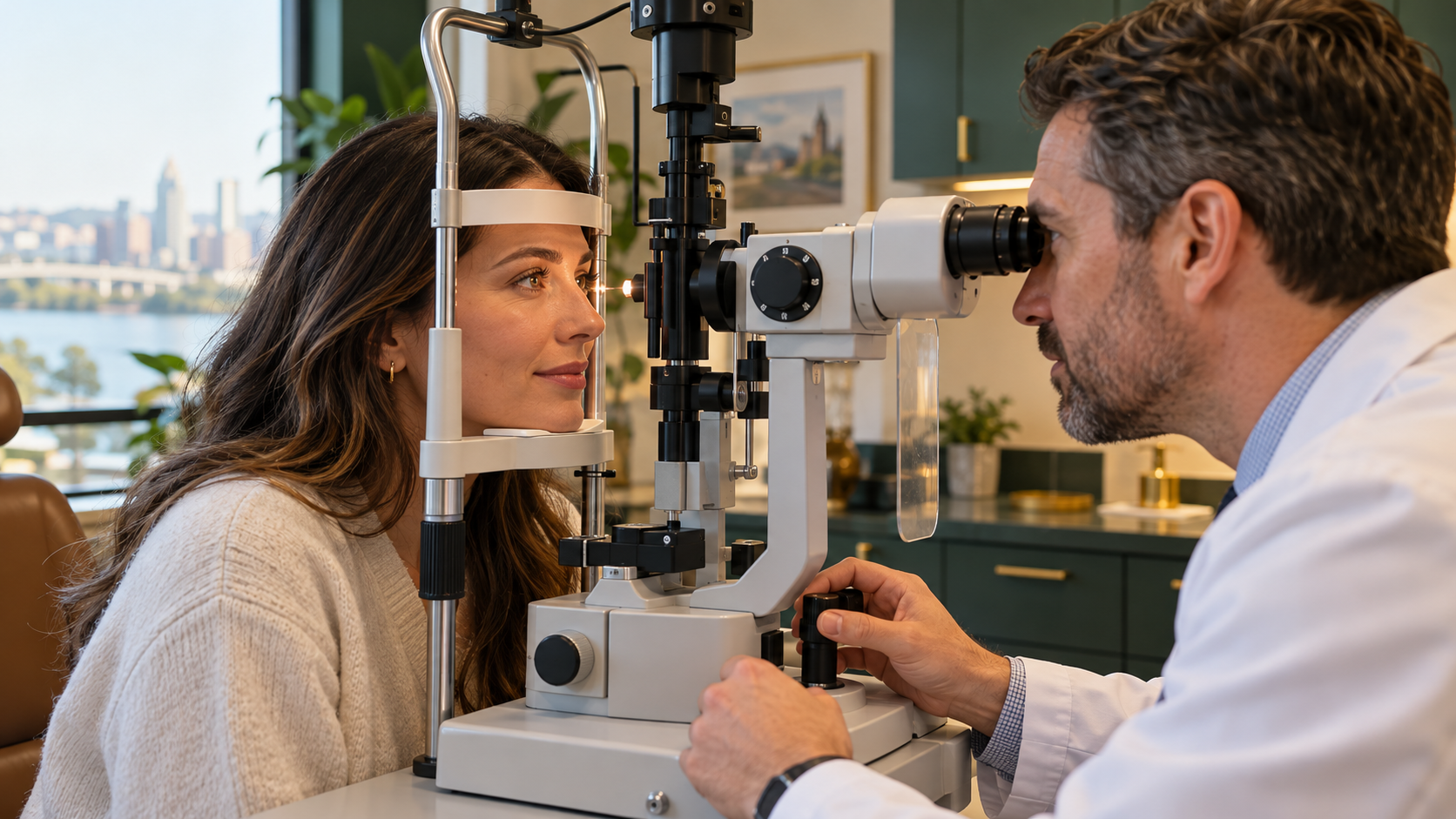
At See Well, an advanced dry-eye evaluation in Cincinnati may include examination of the eyelid margins, gland openings, blink pattern, tear quantity, tear breakup, corneal staining and other findings appropriate to the patient. The NEI overview of dry-eye testing explains why clinicians assess both how many tears are present and how long the tear film lasts.
No single number or device tells the entire story. Symptoms and visible signs do not always match perfectly, so Dr. Baik combines test findings with the patient’s actual experience.
Why Random Eye-Drop Shopping Often Disappoints
The eye-care aisle can be overwhelming. A thicker lubricant may help one person but blur another person’s workday. A preserved drop may be acceptable for occasional use yet become irritating when used frequently. A redness-relief product is not the same as a lubricating tear.
When a product is recommended, purchasing it through See Well can keep the diagnosis, product choice and follow-up connected. The team can explain how often to use it, whether it is compatible with contact lenses and what should prompt a recheck. This does not guarantee a result, and not every patient needs the same drop, supplement or device.
Contact-lens wearers may also need a contact-lens examination because material, fit, replacement schedule and lens-care habits interact with the tear film.
Explore Hyde Park & Nearby Neighborhoods
See Well Eyecare is located in Hyde Park (45208), close to Oakley (45209), Mount Lookout and Mariemont. Patients throughout Cincinnati can receive dry-eye and contact-lens care from one local team that knows their eyes and can adjust the plan over time.
Local Events & Attractions: Build Comfort Into the Day
Wind at Ault Park, heated indoor air near Hyde Park Square, and long screen sessions at work can affect different patients in different ways. Sunglasses, intentional blinking, appropriate humidity and clinician-recommended products may help. Persistent pain, light sensitivity or one-sided redness deserves examination rather than another round of random drops.
Frequently Asked Questions
Are tears mostly water?
Water is important, but healthy tears also contain oils, mucins, proteins and electrolytes. These components work together to spread over the eye, resist evaporation and protect the ocular surface.
Why does blinking temporarily clear my blurry vision?
A blink can briefly restore a smoother tear film. Repeated blur that clears with blinking often suggests an ocular-surface component, but it is not diagnostic by itself.
Can dry eye cause watery eyes?
Yes. Surface irritation can trigger reflex tearing, and those tears may overflow even when the normal tear film is unstable.
Can I use any artificial tear with contact lenses?
No. Read the label and use only products indicated for use with the specific lens-wear situation. If symptoms persist, remove the lenses and arrange an evaluation.
When is dry eye urgent?
Seek prompt care for significant pain, light sensitivity, sudden vision loss, injury, chemical exposure or a markedly red eye—especially in a contact-lens wearer. Those findings may indicate something more urgent than routine dryness.
Schedule a Tear-Film Evaluation
If burning, watering or fluctuating vision keeps returning, request an appointment with See Well Eyecare. Bring every drop or product you use and your contact-lens information so the evaluation can connect symptoms with your full routine.
About the Author
See Well Eyecare is an independent Hyde Park practice led by Dr. Rawzi Baik. The team provides evidence-based dry-eye evaluation, medical eye care, contact-lens services and practical product guidance for patients from Hyde Park, Oakley and greater Cincinnati.
Primary keyword: tear film problems Cincinnati
Supporting keywords: dry eye blurry vision, tears and eye health, meibomian glands, watery dry eyes, Hyde Park dry eye doctor
Quick Links
Helpful Articles

All Eye Care Services
Eye care for every stage of life, from routine exams and contact lens fittings to dry eye care, myopia management and medical eye visits. Dr. Baik helps you understand your options and choose care that fits your needs.

Keep In Touch
For non-urgent questions or to learn more about our services, contact us today!

We are an LGBTQ+ friendly clinic that believes all people deserve quality eye care
- 3330 Erie Avenue, Suite 14
Cincinnati, OH 45208 - Phone: (513) 268-8748
- Fax: (513) 268-8758
- Monday 9:00am - 3:00pm
- Tuesday 8:00am - 7:00pm
- Wednesday Closed
- Thursday 8:00am - 5:00pm
- Friday 7:00am - 3:00pm
- Saturday 8:00am - 2:00pm
- Sunday Closed
- Monday
- Tuesday
- Wednesday
- Thursday
- Friday
- Saturday
- Sunday
- Monday
- Tuesday
- Wednesday
- Thursday
- Friday
- Saturday
- Sunday
© 2026 See Well Eyecare. All rights Reserved - Accessibility Statement - Privacy Policy - Terms & Conditions - Sitemap
Managed and Designed by 