
Seeing BLINK Cincinnati Clearly: Night-Vision, Glare and Contact-Lens Tips for the Festival
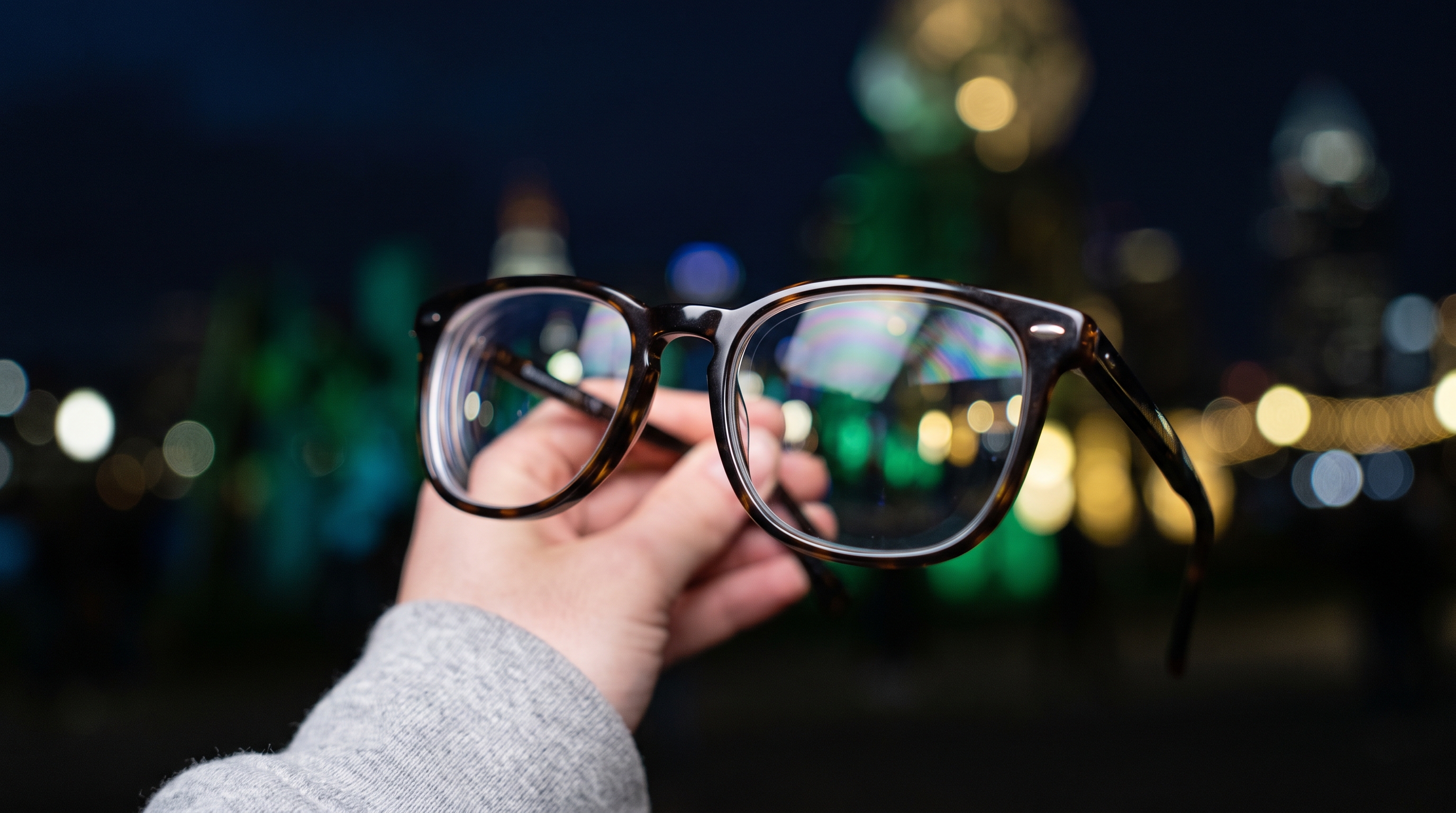
Seeing BLINK Cincinnati Clearly: Night-Vision, Glare and Contact-Lens Tips for the Festival
BLINK transforms more than 30 blocks of Cincinnati and Northern Kentucky October 8–11, with light installations, projection mapping, murals and large nighttime crowds. The visual lessons also apply to every fall concert, evening walk and drive home in the dark.
Bright installations do not eliminate low-light challenges between exhibits. Pupils enlarge, contrast drops and glare can make road markings, curbs and pedestrians harder to judge. An updated prescription and practical preparation matter more than any “night-driving” gimmick.
Use this BLINK Cincinnati night-vision guide to prepare for the festival—and identify what to address before any nighttime event.
Night Vision Is More Than Reading an Eye Chart
The American Academy of Ophthalmology’s vision-and-driving guidance explains that nighttime driving involves poor lighting and more complex visual tasks. Glare, reduced contrast and slower adaptation can expose problems that are less obvious during the day.
Night blur or halos may relate to:
- an outdated glasses or contact-lens prescription;
- uncorrected astigmatism;
- dry or unstable tears;
- dirty, scratched or poorly coated lenses;
- early cataract or another eye condition;
- a contact lens that dries or moves; or
- a windshield, headlight or vehicle-mirror issue.
The AOA’s night-vision safety guide notes that glare, halos and difficulty seeing low-contrast objects can be reasons for an eye examination.
Start With the Prescription You Actually Use at Night
Bring the glasses you drive in—not merely the newest pair—to a comprehensive eye examination. Tell Dr. Baik whether the problem is blur, ghosting, glare, halos, starbursts or delayed adaptation.
A tiny prescription change does not always justify new glasses. Scratches, lens design, frame position and anti-reflective treatment can still matter when the prescription is stable. See Well’s optical team can review the complete system rather than selling an unexplained upgrade.
For a legitimate second pair, define the job: nighttime driving, prescription sunwear, computer work or contact-lens backup. One pair is not automatically ideal for every task.
Contact-Lens Wearers: Do Not Stretch the Night
Long wear time, wind, cold air, screen use and a late schedule can destabilize the tear film. Carry current glasses so you can remove lenses if they become uncomfortable.
Follow the CDC’s contact-lens prevention guidance: wash and dry hands, keep lenses away from water, use recommended supplies and stop wear when symptoms develop. Never sleep in lenses after an event unless a specific overnight-wear lens has been prescribed—and never sleep in a red or painful eye.
If you need a fit review, See Well provides contact-lens examinations that assess corneal health, tear quality, movement, vision and comfort.
Walking Safely in a Bright-and-Dark Environment
Festival routes alternate between illuminated art and darker cross streets. The National Highway Traffic Safety Administration advises extra nighttime caution because pedestrians can be harder for drivers to see.
Practical habits include:
- use marked crossings and obey signals;
- wear visible or reflective details;
- keep children close in dense crowds;
- stop before looking at a map or phone;
- do not assume a driver sees you; and
- use a flashlight when a path is genuinely dark without shining it into others’ eyes.
NHTSA’s research summary notes that twilight, darkness and headlamp glare challenge pedestrian detection.
Light Sensitivity and Migraine
Some people find rapidly changing brightness uncomfortable. If you have migraine or photophobia, pace the evening, take breaks in a calm area and follow the plan created with your healthcare clinician.
Tinted lenses are not automatically appropriate for night driving because reducing incoming light can make already-dark conditions harder. If symptoms are new, one-sided or associated with vision loss, do not assume they are “just migraine.”
Our guide to eye pain and light sensitivity explains when symptoms need prompt evaluation.
Use Official Transportation Information
For BLINK, Cincinnati Metro offered event service and planning through its official BLINK transportation page, while the City posted current street closures. Choosing transit or a designated driver can be sensible when night vision, dilation, fatigue or crowds make driving less comfortable.
Explore Hyde Park & Nearby Neighborhoods
See Well Eyecare is in Hyde Park (45208), convenient to Oakley (45209), Mount Lookout and Columbia-Tusculum. We help Cincinnati families and professionals connect visual symptoms with an appropriate exam, eyewear or contact-lens plan before the next nighttime outing.
Local Events & Attractions | BLINK’s Verified Schedule
The official BLINK website confirms October 8–11, with most installations active from 7–11 p.m. Check the official schedule and map before leaving because locations and access details can change.
Frequently Asked Questions
Are yellow “night-driving glasses” proven to solve glare?
Be cautious with broad claims. A tint reduces light reaching the eye and does not correct an outdated prescription, cataract, dry eye or scratched lenses.
Why do lights look like starbursts?
Astigmatism, dry eye, contact-lens issues, lens scratches, cataract and other conditions can contribute. An examination can narrow the cause.
Should I drive after dilation?
Some people experience substantial blur and light sensitivity. Follow your doctor’s advice and arrange transportation when needed.
Can I wear costume contacts to a light festival?
Only prescription decorative lenses obtained through a proper eye examination and fitting should be worn. Never buy unprescribed lenses from a costume seller.
What if night vision is suddenly worse in one eye?
Schedule an examination promptly, especially with pain, flashes, floaters, a curtain, distortion or other sudden change.
Address Night-Vision Problems Before the Next Drive
If glare, halos or blur make Cincinnati nights difficult, request an appointment. Bring the glasses or contacts you use after dark and describe the exact situations that cause difficulty.
About See Well Eyecare
See Well Eyecare is a locally owned independent optometry and optical practice in Hyde Park, Cincinnati. Dr. Rawzi Baik and the optical team provide comprehensive examinations, contact-lens care and purpose-driven eyewear recommendations with professional measurements and local follow-up.
Primary keyword: BLINK Cincinnati night vision
Supporting keywords: night driving eye exam Cincinnati, glare and halos at night, contact lenses at festivals, Cincinnati eye safety, Hyde Park optometrist
Quick Links
Helpful Articles

All Eye Care Services
Eye care for every stage of life, from routine exams and contact lens fittings to dry eye care, myopia management and medical eye visits. Dr. Baik helps you understand your options and choose care that fits your needs.

Keep In Touch
For non-urgent questions or to learn more about our services, contact us today!

We are an LGBTQ+ friendly clinic that believes all people deserve quality eye care
- 3330 Erie Avenue, Suite 14
Cincinnati, OH 45208 - Phone: (513) 268-8748
- Fax: (513) 268-8758
- Monday 9:00am - 3:00pm
- Tuesday 8:00am - 7:00pm
- Wednesday Closed
- Thursday 8:00am - 5:00pm
- Friday 8:00am - 3:00pm
- Saturday 9:00am - 2:00pm
- Sunday Closed
- Monday
- Tuesday
- Wednesday
- Thursday
- Friday
- Saturday
- Sunday
- Monday
- Tuesday
- Wednesday
- Thursday
- Friday
- Saturday
- Sunday
© 2026 See Well Eyecare. All rights Reserved - Accessibility Statement - Privacy Policy - Terms & Conditions - Sitemap
Managed and Designed by 