
GLP-1 Medications and Your Eyes: Ozempic, Wegovy, Mounjaro, Zepbound and More
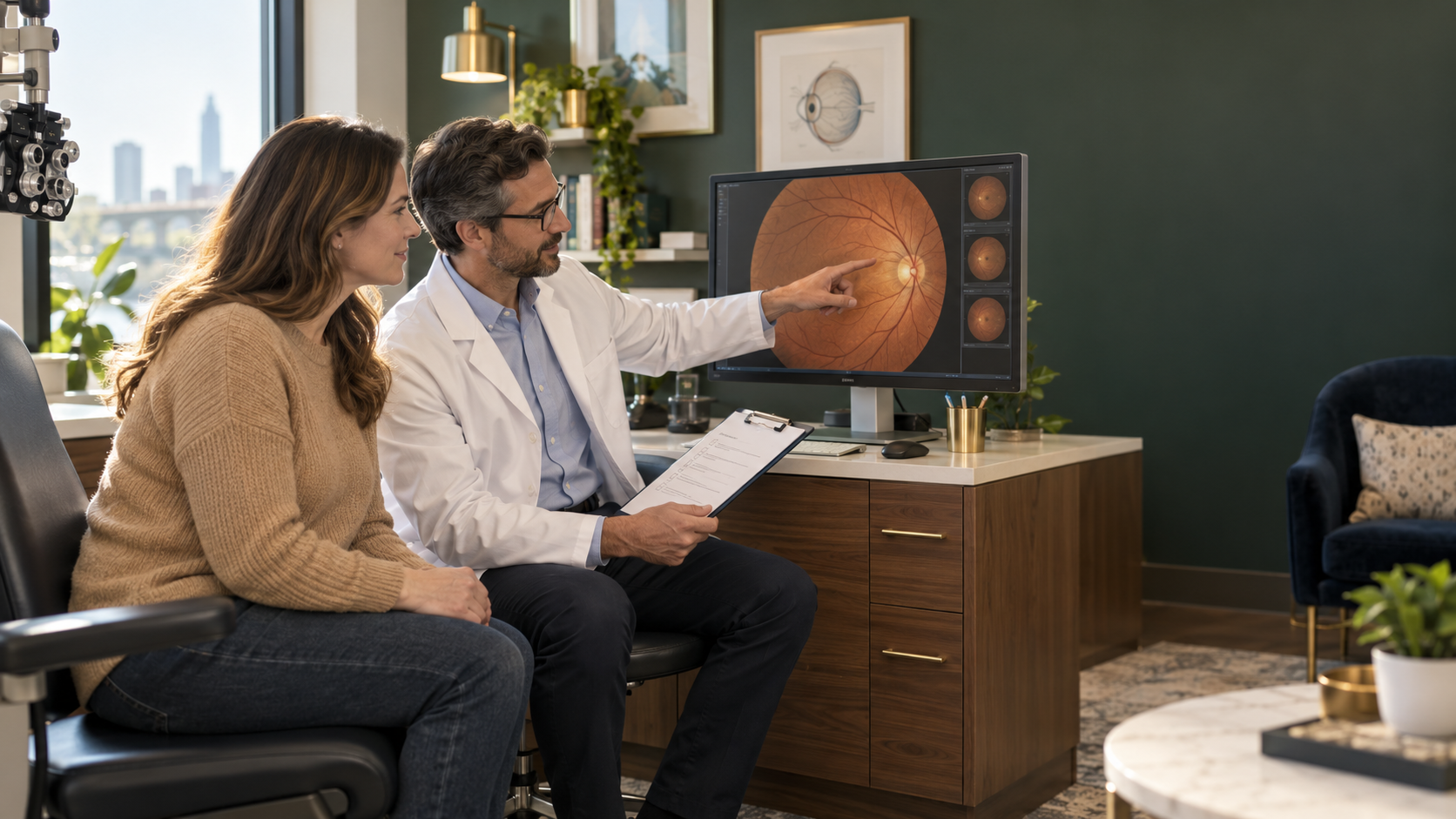
GLP-1 Medications and Your Eyes: Ozempic, Wegovy, Mounjaro, Zepbound and More
GLP-1 medications have changed the treatment of type 2 diabetes, obesity and related health risks. Their growing use has also brought understandable questions: Can they blur vision? Can they worsen diabetic retinopathy? What have researchers said about the optic nerve?
The answers require context. Some visual changes reflect shifting blood glucose rather than direct eye toxicity. Certain patients with diabetes need closer retinal monitoring when glucose improves rapidly. Research on non-arteritic anterior ischemic optic neuropathy—NAION—is evolving, and causation has not been established.
Patients searching for information about GLP-1 medications and eye health in Cincinnati should not stop a beneficial medication on their own. The safer approach is coordinated care and prompt evaluation of new symptoms.
Common GLP-1 and Related Medications: Brand and Active Ingredient
“Generic name” in this list means the active ingredient; it does not necessarily mean an interchangeable generic product is available. Indications, formulations and availability change, and the prescription label should be checked.
| Active ingredient | Common U.S. brand names | Drug class or distinction |
|---|---|---|
| Semaglutide | Ozempic, Wegovy, Rybelsus | GLP-1 receptor agonist; brand indications and formulations differ |
| Tirzepatide | Mounjaro, Zepbound | Dual GIP/GLP-1 receptor agonist—not identical to a GLP-1-only drug |
| Dulaglutide | Trulicity | GLP-1 receptor agonist |
| Liraglutide | Victoza, Saxenda | GLP-1 receptor agonist; brand indications differ |
| Exenatide | Byetta, Bydureon BCise | GLP-1 receptor agonist; immediate- and extended-release forms |
| Lixisenatide | Adlyxin; also included with insulin glargine in Soliqua | GLP-1 receptor agonist; combination products require separate review |
The FDA’s current semaglutide labeling, tirzepatide labeling, dulaglutide labeling, liraglutide labeling, exenatide labeling and lixisenatide labeling are the best sources for current indications and safety language. Do not substitute one brand for another based only on a social-media list.
Why Vision Can Blur When Blood Glucose Changes
High or rapidly changing blood glucose can alter fluid movement in the crystalline lens inside the eye. That can temporarily shift focus and make a glasses prescription seem different. As glucose stabilizes, vision may change again.
This is one reason to avoid ordering expensive new lenses during a major glucose transition without discussing timing with the eye doctor. It does not mean every blur is harmless. Persistent blur, unequal vision or a sudden change still requires an examination.
An up-to-date comprehensive eye examination can distinguish a refractive shift from cataract, retinal disease, dry eye and other causes.
Diabetic Retinopathy: The Speed of Improvement Matters
Diabetic retinopathy is damage to retinal blood vessels related to diabetes. Better long-term glucose control generally protects eye health, but rapid improvement in glucose can be associated with short-term worsening of existing retinopathy in some patients.
The semaglutide prescribing information includes a warning about diabetic-retinopathy complications observed in a cardiovascular-outcomes trial and advises monitoring patients with a history of retinopathy. The National Eye Institute’s diabetic-retinopathy guide explains that early disease may have no symptoms, which is why a dilated retinal examination matters.
A 2025 systematic review and meta-analysis found that the overall evidence across GLP-1 receptor agonists and diabetic retinopathy remains mixed. The drug name alone does not determine risk. Baseline retinopathy, A1c level, how quickly glucose changes, diabetes duration and other medical factors matter.
If you have diabetes and are starting or increasing one of these medications, tell the prescriber when your last dilated eye examination occurred. Tell the eye doctor the exact medication, dose, start date and recent A1c trend.
What Is the Concern About NAION?
NAION is an uncommon optic-nerve condition that usually causes sudden, painless vision loss in one eye. Diabetes, high blood pressure, sleep apnea and certain optic-nerve anatomy are among recognized risk factors.
Recent observational studies raised concern about a possible association between semaglutide and NAION. However, observational studies can identify a signal without proving that a medication caused the event.
In 2026, the North American Neuro-Ophthalmology Society and American Academy of Ophthalmology issued a joint consensus statement on GLP-1 medicines and NAION. Their key patient message is balanced: the risk appears low, causation has not been shown, sudden vision loss needs immediate evaluation, and medication decisions should use shared decision-making rather than an automatic stop.
Do Not Stop a GLP-1 Medicine on Your Own
These medicines may provide substantial glucose, cardiovascular, kidney, weight or sleep-apnea benefits for appropriately selected patients. Abruptly stopping can create medical consequences.
If an eye problem develops:
Seek the appropriate level of eye care immediately.
Tell the eye clinician the exact medicine and dose.
Contact the prescribing clinician.
Let the clinicians coordinate the decision to continue, hold or change treatment.
The eye doctor evaluates the eye; the prescriber understands why the medication was selected and the risks of changing it. Both perspectives matter.
Eye Symptoms That Need Urgent Attention
Seek same-day or emergency evaluation for:
sudden painless vision loss in one eye;
a new dark area, curtain or missing part of vision;
a sudden shower of floaters or repeated flashes;
severe eye pain, redness and light sensitivity;
new double vision; or
vision change with weakness, facial droop, speech difficulty, imbalance or a severe headache.
See Well evaluates many urgent eye problems through our emergency eye-care service. Major vision loss or neurologic symptoms may require the emergency department instead of waiting for an office visit.
A Practical Monitoring Plan
There is no single extra eye test required for every person using a GLP-1 medicine. A useful plan depends on the reason for treatment and existing eye disease.
Consider:
a baseline or current dilated examination if you have diabetes;
keeping the eye doctor informed about rapid A1c changes;
following the retinal specialist’s schedule if retinopathy already exists;
checking vision one eye at a time when something feels different; and
reporting sudden changes immediately rather than waiting for an annual visit.
Our patient FAQ explains routine, medical and urgent eye-care pathways at See Well. Patients without vision insurance may also review direct-care options, while medically necessary testing remains separate and depends on the clinical situation.
Explore Hyde Park & Nearby Neighborhoods
See Well Eyecare serves adults from Hyde Park (45208), Oakley (45209), Mariemont (45227) and Walnut Hills (45207). Our Erie Avenue location offers free parking and a neighborhood setting for comprehensive and medical eye care.
Local Events & Attractions | Healthy Cincinnati Routines
Medication is only one part of a health plan. For movement and outdoor time, explore the connected route along Wasson Way, review community fitness programs through the Cincinnati Recreation Commission, or shop for ingredients at Findlay Market. These activities do not replace prescribed diabetes or obesity treatment, but they can support a clinician-guided routine.
Frequently Asked Questions
Can Ozempic or Wegovy make vision blurry?
Vision can fluctuate when blood glucose changes, especially during a rapid improvement. Persistent, unequal or sudden blur still requires an eye examination because many other causes are possible.
Is Mounjaro a GLP-1 medication?
Mounjaro contains tirzepatide, which activates both GIP and GLP-1 receptors. It is commonly discussed with GLP-1 medicines but is pharmacologically a dual agonist.
Do GLP-1 medicines cause diabetic retinopathy?
Evidence does not support a simple class-wide statement. Some risk may relate to rapid glucose improvement in people with existing retinopathy. Individual monitoring should reflect baseline eye findings and diabetes history.
Do these medications cause NAION?
Studies have raised a possible association, particularly with semaglutide, but causation has not been established and the absolute risk appears low. Sudden painless vision loss is an emergency regardless of the medication.
Should I stop semaglutide if my vision changes?
Do not make that decision alone. Obtain urgent eye evaluation when appropriate and contact the prescribing clinician so the benefits and risks can be considered together.
Where can I schedule an eye examination while using a GLP-1 medication?
Submit an appointment request and include the medication name, whether you have diabetes, your last eye examination and the nature and timing of any visual change.
About the Author
Dr. Rawzi Baik is the owner and optometrist at See Well Eyecare in Hyde Park, Cincinnati. A graduate of The Ohio State University College of Optometry, he provides comprehensive and medical eye care with an emphasis on early detection, clear explanations and coordination with the patient’s broader healthcare team.
Connect the Prescription With the Eye Examination
GLP-1 medicines should be discussed accurately—not sensationalized and not dismissed. If you have diabetes, a major change in glucose control or a new visual symptom, schedule the appropriate eye examination and keep both clinicians informed.
Primary keyword: GLP-1 eye effects Cincinnati
Supporting keywords: Ozempic vision changes, Wegovy eye health, Mounjaro eyes, Zepbound vision, semaglutide diabetic retinopathy, GLP-1 NAION
Quick Links
Helpful Articles

All Eye Care Services
Eye care for every stage of life, from routine exams and contact lens fittings to dry eye care, myopia management and medical eye visits. Dr. Baik helps you understand your options and choose care that fits your needs.

Keep In Touch
For non-urgent questions or to learn more about our services, contact us today!

We are an LGBTQ+ friendly clinic that believes all people deserve quality eye care
- 3330 Erie Avenue, Suite 14
Cincinnati, OH 45208 - Phone: (513) 268-8748
- Fax: (513) 268-8758
- Monday 9:00am - 3:00pm
- Tuesday 8:00am - 7:00pm
- Wednesday Closed
- Thursday 8:00am - 5:00pm
- Friday 8:00am - 3:00pm
- Saturday 9:00am - 2:00pm
- Sunday Closed
- Monday
- Tuesday
- Wednesday
- Thursday
- Friday
- Saturday
- Sunday
- Monday
- Tuesday
- Wednesday
- Thursday
- Friday
- Saturday
- Sunday
© 2026 See Well Eyecare. All rights Reserved - Accessibility Statement - Privacy Policy - Terms & Conditions - Sitemap
Managed and Designed by 